Top Benefits of Solar Street Lights for Sustainable Urban Development
As urban areas continue to expand, the need for sustainable solutions in city planning becomes increasingly critical. Solar street lights are emerging as one of the most effective technologies in this arena, combining environmental benefits with economic efficiency. According to a report by the International Renewable Energy Agency, solar lighting can reduce energy consumption by up to 80% compared to traditional street lighting, significantly lowering carbon emissions and reliance on non-renewable energy sources.
Experts in the field, such as Dr. Emily Turner, a leading researcher in renewable energy technologies, emphasize the transformative potential of solar street lights. She states, "The integration of solar street lights into urban infrastructure not only conserves energy but also enhances public safety and community well-being." By harnessing the sun's energy, cities can effectively illuminate public spaces while fostering a greener environment and reducing operational costs associated with conventional lighting systems.
Moreover, the implementation of solar street lights is not just an environmental consideration; it directly contributes to the economic viability of urban developments. As reported by the Global Lighting Association, cities that adopt solar street lighting solutions have observed a significant decrease in maintenance costs and increased operational efficiency, making solar street lights a compelling choice for sustainable urban development.

Advantages of Solar Street Lights in Sustainable Urban Policies
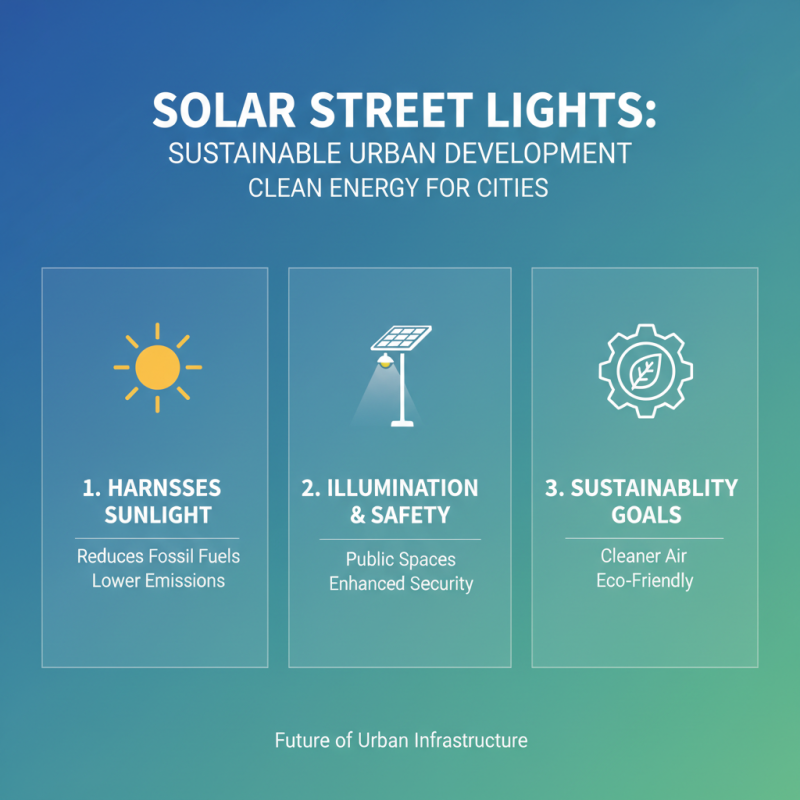
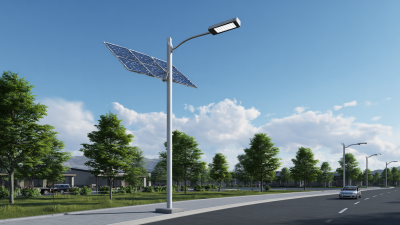
The integration of solar street lights into urban policies represents a significant step toward sustainable development. These lights utilize renewable energy to illuminate public spaces, which not only reduces dependence on fossil fuels but also decreases greenhouse gas emissions. By harnessing the power of the sun, cities can ensure that their street lighting systems are energy-efficient and environmentally friendly, contributing to climate change mitigation efforts.
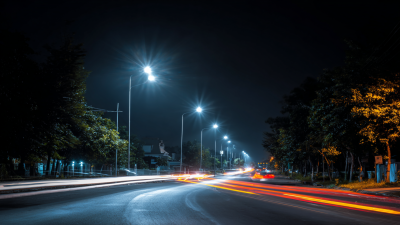
Moreover, solar street lights enhance urban safety and accessibility. They provide consistent and reliable lighting during nighttime, improving visibility for pedestrians and cyclists. This increased safety encourages more people to engage in outdoor activities, fostering community interaction and promoting healthier lifestyles. Additionally, the installation of solar lighting systems often requires less infrastructure compared to traditional electrical systems, reducing overall installation costs and minimizing disruption during the implementation phase.
As urban areas continue to grow, incorporating solar street lights into development strategies will play a crucial role in achieving more sustainable, resilient, and livable cities.
Integration of Renewable Energy Sources in Urban Infrastructure
The integration of renewable energy sources in urban infrastructure is a pivotal aspect of sustainable urban development. Solar street lights serve as a prime example of this integration, harnessing sunlight to provide illumination and enhance safety in public spaces. By utilizing solar panels, these lights reduce dependency on fossil fuels, thereby lowering greenhouse gas emissions and contributing to cleaner air quality. As cities increasingly seek to mitigate their environmental impact, adopting solar street lights is an effective strategy that aligns with broader sustainability goals.
Moreover, solar street lights offer economic benefits by decreasing energy costs. Traditional street lighting systems incur high electricity bills, whereas solar-powered lights operate independently of the grid. This autonomy not only reduces financial burdens on municipal budgets but also ensures continuous illumination in areas that may experience power outages. Additionally, the installation of solar street lights can promote job creation in the renewable energy sector, stimulating local economies while fostering community engagement in sustainability efforts.
As urban areas continue to expand, the implementation of renewable technologies like solar street lights is crucial in creating resilient infrastructures. These innovations support urban planners in designing greener cities, ultimately improving the quality of life for residents. Embracing solar energy within urban infrastructure not only advances immediate environmental benefits but also sets a precedent for future developments focused on long-term sustainability.
Reduction of Carbon Footprint through Solar Lighting Solutions
Solar street lights represent a significant advancement in sustainable urban development, particularly in the drive to reduce carbon footprints. Traditional street lighting systems commonly rely on electricity generated from fossil fuels, contributing to greenhouse gas emissions. According to a report by the International Energy Agency (IEA), lighting accounts for approximately 19% of global electricity consumption, leading to around 2.1 gigatons of CO2 emissions annually. By transitioning to solar lighting solutions, cities can harness renewable energy, effectively decreasing their reliance on nonrenewable resources and mitigating the impacts of climate change.
The implementation of solar street lights not only supports carbon reduction but also enhances energy efficiency. A study by the U.S. Department of Energy stated that solar LEDs can reduce energy consumption by 50-70% compared to traditional lighting systems. Additionally, solar street lights often come equipped with smart technology that optimizes energy usage based on real-time environmental data. This dual benefit of reducing energy demand and emissions while providing effective public lighting solutions positions solar street lights as a critical component in the quest for sustainable urban environments.
Cost-Effectiveness and Long-Term Savings of Solar Street Lights
Solar street lights offer a cost-effective solution for urban areas aiming to enhance their lighting infrastructure. The initial investment in solar lighting systems can be significantly offset by the elimination of monthly electricity bills. Unlike traditional street lights that rely on grid power, solar lights harness renewable energy, allowing cities to allocate funds previously spent on electricity to other critical services. Over time, the cumulative savings can be substantial, leading to budget surpluses that can be reinvested in community projects or infrastructure upgrades.
Beyond immediate savings, solar street lights present long-term financial advantages through reduced maintenance costs. These lights are typically designed with durable components that can withstand harsh weather conditions, thereby minimizing the frequency of repairs and replacements. Additionally, the incorporation of LED technology not only extends the lifespan of the lights but also enhances energy efficiency, further contributing to reduced operational expenses. As cities focus on sustainable development, investing in solar street lighting represents a strategic choice that aligns economic benefits with environmental stewardship.
Top Benefits of Solar Street Lights for Sustainable Urban Development
| Benefits |
Description |
Cost-Effectiveness |
Long-Term Savings |
| Energy Independence |
Solar street lights utilize sunlight, reducing reliance on grid electricity. |
Low or no electricity costs, depending on sunlight availability. |
Can save thousands in energy costs over their lifespan. |
| Reduced Carbon Footprint |
Contributes to lower greenhouse gas emissions by using renewable energy. |
No fossil fuel use, cutting costs on environmental taxes. |
Less investment in carbon offset programs over time. |
| Low Maintenance Costs |
Solar lights typically require less maintenance than conventional lights. |
Long-lasting LED technology reduces replacement frequency. |
Savings on labor and materials for maintenance over time. |
| Enhanced Safety and Visibility |
Improves nighttime safety for pedestrians and drivers. |
Potential reduction in accidents leading to lower liability costs. |
Long-term savings from avoided claims and settlements. |
| Aesthetic Appeal |
Modern designs can enhance the beauty of urban landscapes. |
Can attract tourism and increase local business revenue. |
Increased property values in aesthetically enhanced areas. |
Enhancing Safety and Security in Urban Areas with Solar Lighting
Solar street lights are increasingly recognized for their role in enhancing safety and security in urban areas. With urban populations continuing to grow—expected to reach 68% globally by 2050 according to the United Nations—cities are under pressure to ensure public spaces are safe and well-lit. Studies have shown that improved lighting reduces crime rates significantly; a report by the National Institute of Justice indicates that outdoor lighting varies the likelihood of crime by up to 25%. Solar street lights, with their self-sufficient energy systems, can be strategically placed in high-risk areas to deter criminal activities while providing consistent illumination throughout the night.
Moreover, solar lighting contributes to the sense of safety through increased visibility, which is crucial in urban environments where foot traffic is high. Research from the International Dark-Sky Association highlights that better-lit streets lead to lower accident rates and encourage community engagement. A well-lit environment promotes social interaction, reduces fear among residents, and ultimately fosters a vibrant community atmosphere.
Tips for cities considering solar street lighting include conducting a thorough assessment of existing lighting infrastructure to identify areas that require enhancement. Engaging with community members can provide insights into specific safety concerns and help prioritize locations for installation. Additionally, regular maintenance checks are vital to ensure that solar panels and lighting systems function optimally, maximizing their potential for enhancing urban safety.
Top Benefits of Solar Street Lights for Sustainable Urban Development