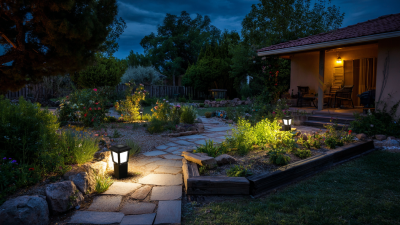
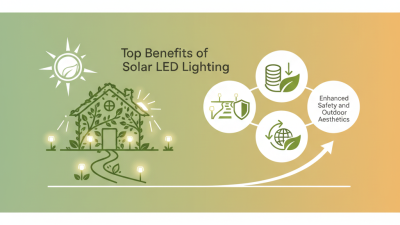
Choosing among the best LED solar lights manufacturers in China requires more than comparing catalog photos or quoted prices. Buyers need to examine light output, battery capacity, solar-panel performance, materials, and production consistency. A fixture may look powerful in a showroom yet dim before dawn after several cloudy days. Details matter.
Lin Wei, a composite solar-lighting specialist representing common industry experience, frames the buying test this way: “A bright sample is only convincing when its battery and panel can deliver dependable light through changing weather.” This is a practical principle, not a substitute for product testing. Ask manufacturers for clear specifications, test methods, sample units, and written warranty terms. Check whether ratings describe the complete fixture or only individual components. Small distinctions can change the real-world result.
This guide introduces manufacturers and explains how buyers can assess their capabilities, product ranges, customization options, and communication practices. It also considers useful checks, such as inspecting seals, reviewing charging behavior, and comparing runtime under similar conditions. Request evidence, not just confident claims. A factory visit or independent inspection may reveal useful details, but neither guarantees long-term performance. Even careful buyers can miss something. The goal is to compare suppliers consistently and identify unanswered questions before placing an order. By focusing on measurable performance and transparent documentation, buyers can make a more informed shortlist of led solar lights suppliers.
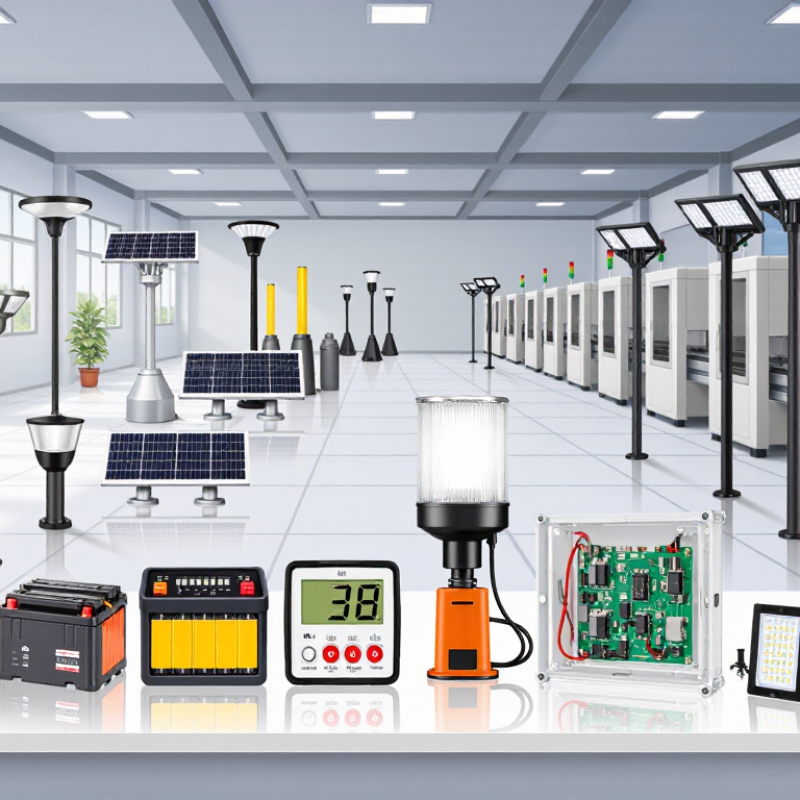
An LED solar light is a small power system, not just a lamp with a panel. Its photovoltaic panel converts sunlight into electricity, while a charge controller regulates charging and helps protect the battery. After dusk, stored energy powers the LED; lenses or reflectors shape the beam, and a light sensor can trigger automatic operation. Each part affects the others. A bright LED may drain a small battery quickly.
LED efficiency helps, but it does not guarantee reliable outdoor lighting. The U.S. Department of Energy reports that LEDs use at least 75% less energy and can last up to 25 times longer than incandescent lighting. Those figures describe LED technology, not the runtime of a complete solar fixture. Shade, cloudy days, battery capacity, temperature, and dimming settings all matter. A specification sheet may look convincing. Real conditions can disagree.
Tips: Ask how runtime is measured, and whether testing uses a fully charged battery. Check panel wattage, battery capacity, and the stated operating temperature range. Look for clear details on water resistance and replacement parts. Small details matter. Test samples outdoors across several nights; a single sunny-day test can hide weak charging performance. IEA PVPS reported about 1.6 terawatts of cumulative global solar PV capacity at the end of 2023, but broad market growth alone cannot verify a light’s quality. A more careful comparison starts with component data and repeatable tests.
China’s LED solar lighting manufacturing landscape includes factories focused on outdoor fixtures, compact garden lamps, streetlights, and integrated solar systems. Production often draws on local supply networks for LED boards, batteries, controllers, aluminum housings, and tempered glass. This can shorten sourcing cycles, but component quality still varies. A bright sample is not enough.
For buyers, useful checks begin with the product’s intended conditions. Ask how a fixture performs after several cloudy days, and request test records for battery capacity, charging behavior, and water resistance. Inspect cable seals and the underside of the panel, not only the polished front. Details matter. A controller’s low-voltage cutoff, for example, can affect battery life as much as the panel’s rated power.
Manufacturers may offer customization in housing color, mounting brackets, panel size, or packaging. These changes can affect cost and lead time, so confirm the final specifications in writing before approving a sample. Factory photographs and certificates provide clues, yet they cannot replace consistent production checks. I would also compare the sample with units from a later batch; small differences in wiring or finish sometimes appear. No single test tells the whole story, and buyers should allow time for outdoor trials before placing a large order.
Buyers will commonly find solar pathway lights, garden lights, wall lights, floodlights, and street or area lights. Pathway models usually have compact panels and low-glare output for walkways. Garden lights add decorative shapes, but their light may be too soft for practical tasks. Floodlights deliver broader, brighter beams for yards or entrances. Some include motion sensors, which can help conserve stored energy.
Wall-mounted lights come as integrated units or split-panel designs. A split panel can be positioned in sunlight while the lamp stays under an eave. Solar street lights serve roads, parking areas, and larger sites; check the beam pattern, battery capacity, and mounting height, not just the wattage printed on the carton. In product comparisons, small differences in panel placement can matter. Real installations can still disappoint when trees shade the panel.
Tips: Ask for runtime data under stated conditions, and confirm battery type, panel power, and water-resistance details. Test one sample through cloudy days before ordering in bulk. A bright label alone proves little.
When comparing Chinese solar-light manufacturers, look beyond unit price and catalog brightness. IRENA’s Renewable Capacity Statistics 2024 reports that solar power added 346 GW of capacity worldwide in 2023. That growth signals a larger supply ecosystem, not proof that any factory makes reliable lights. Ask for the actual production site, monthly capacity, and recent inspection records. Then compare a sample against its datasheet.
Check measurable details. Request battery chemistry and rated capacity, panel output, tested lumen level, and runtime after a defined charging period. Ask how runtime changes after several cloudy days. A dusk-to-dawn claim means little without test conditions. Inspect seals, cable entries, and fasteners; water resistance can fail at a poorly closed joint. Review the stated IP rating and ask for the test report, not just a printed mark.
Compare quality controls as carefully as specifications. Request batch traceability, incoming-cell checks, aging-test records, and the process for handling defects. Clarify warranty exclusions, spare-part availability, and lead times in writing. A factory audit or live production video can help, but neither replaces independent sample testing. I would not choose on paperwork alone; even a polished report can miss a weak battery batch. That part takes patience.
| Evaluation dimension | What buyers should check | Supplier A | Supplier B | Supplier C |
|---|---|---|---|---|
| Product fit and application | Confirm the intended use—such as pathway, garden, security, or roadway lighting—and check the proposed mounting height, beam distribution, operating mode, and installation conditions. | Enter model and evidence | Enter model and evidence | Enter model and evidence |
| Photometric performance | Request a test report with luminous flux, electrical power, efficacy, correlated color temperature, color rendering information, and a photometric file (such as IES or LDT). Compare results for the same product configuration. | Record report/date | Record report/date | Record report/date |
| Solar panel and charging | Verify panel type, rated peak power, dimensions, charge-controller details, and the conditions used for charging-time claims. Ask how performance is affected by shading, season, and local solar conditions. | Record specs/test basis | Record specs/test basis | Record specs/test basis |
| Battery and runtime | Record battery chemistry, nominal voltage, rated capacity in Ah or Wh, and replaceability. Request runtime test conditions, including brightness setting, operating schedule, temperature, and whether the battery was fully charged. | Record specs/test basis | Record specs/test basis | Record specs/test basis |
| Ingress protection and construction | Check the stated IP rating against the product’s installation environment and request supporting test evidence. IEC 60529 defines the IP Code; confirm that the report covers the offered model and relevant enclosure configuration. | Record rating/report | Record rating/report | Record rating/report |
| Safety and market documentation | Identify the destination market and request applicable conformity documents and test reports for the exact model. IEC 60598-1 covers general luminaire requirements; IEC 60598-2-3 applies to road and street lighting luminaires. Applicability depends on product and market. | List documents verified | List documents verified | List documents verified |
| Battery transport records | For lithium batteries, request applicable UN 38.3 test-summary information and confirm that the battery type matches the shipment. UN 38.3 concerns transport testing; it is not a general product-quality rating. | Record status/model match | Record status/model match | Record status/model match |
| Quality control and traceability | Ask for incoming-material, in-process, and final-inspection procedures; sample inspection records; serial or batch traceability; and the scope and validity of any quality-management certification. Verify certificates with the issuing body where practical. | Record evidence checked | Record evidence checked | Record evidence checked |
| Sample and production consistency | Test a production-representative sample and compare its bill of materials, light output, charging behavior, controls, finish, and packaging with the approved specification and pre-production sample. | Record sample result | Record sample result | Record sample result |
| Warranty and after-sales support | Compare the written warranty term, covered components, exclusions, remedy process, spare-parts availability, response arrangements, and who pays return or replacement freight. Treat these as contract terms to verify, not assumed industry guarantees. | Record quoted terms | Record quoted terms | Record quoted terms |
| Commercial and delivery terms | Compare like-for-like quotations: unit price, tooling or customization charges, minimum order quantity, production lead time, payment terms, packaging, shipping basis, and quoted validity period. | Enter quoted terms | Enter quoted terms | Enter quoted terms |
| Overall assessment | Score each supplier against the same requirements and evidence. Prioritize verified performance, compliance for the destination market, sample results, and total landed cost over unsupported claims. | Score: ___ / 5 | Score: ___ / 5 | Score: ___ / 5 |
When comparing LED solar light manufacturers in China, ask for reports tied to the exact model, not a similar product. Check light output, runtime, battery capacity, ingress protection, and performance after repeated charge-discharge cycles. A 2013 review in Progress in Photovoltaics, based on photovoltaic degradation studies, reported a median module degradation rate near 0.5% per year. Treat this as a panel benchmark, not a lifespan guarantee for a complete light. Paperwork is not proof.
For compliance, request applicable test reports and verify model numbers, component lists, and issuing laboratories. Depending on the destination market, checks may include IEC 60598 luminaire safety, IEC 62133 battery safety, and IEC 61215 or IEC 61730 for PV modules. Confirm warranty coverage, exclusions, spare-part availability, lead time, payment milestones, and agreed Incoterms in writing. A polished sample can still hide a weak battery; one bright afternoon proves little.
Tips: Ask for a pre-shipment inspection with photos of labels, wiring, and carton drop-test results. Put the agreed brightness, operating hours, and test method into the purchase specification. Check a sample through several cloudy days, then compare its measured output with the factory’s claim.