How to Choose the Best LED Work Light for Your Needs?
In recent years, the demand for LED work lights has surged significantly, reflecting their advantages in energy efficiency and durability compared to traditional lighting options. According to a report from the U.S. Department of Energy, LED lighting consumes at least 75% less energy than incandescent lighting, and it lasts up to 25 times longer. This remarkable efficiency has made LED work lights a popular choice among professionals in construction, automotive repair, and even household projects.
As the market for LED work lights continues to grow, with projections estimating it will reach over $2 billion by 2026, understanding how to choose the right LED work light has become paramount for consumers. Key factors such as brightness, portability, battery life, and beam angle are critical in addressing various lighting needs. By considering these aspects, users can find a work light that not only meets their specific requirements, but also maximizes performance and efficiency, ensuring that tasks can be completed safely and effectively.
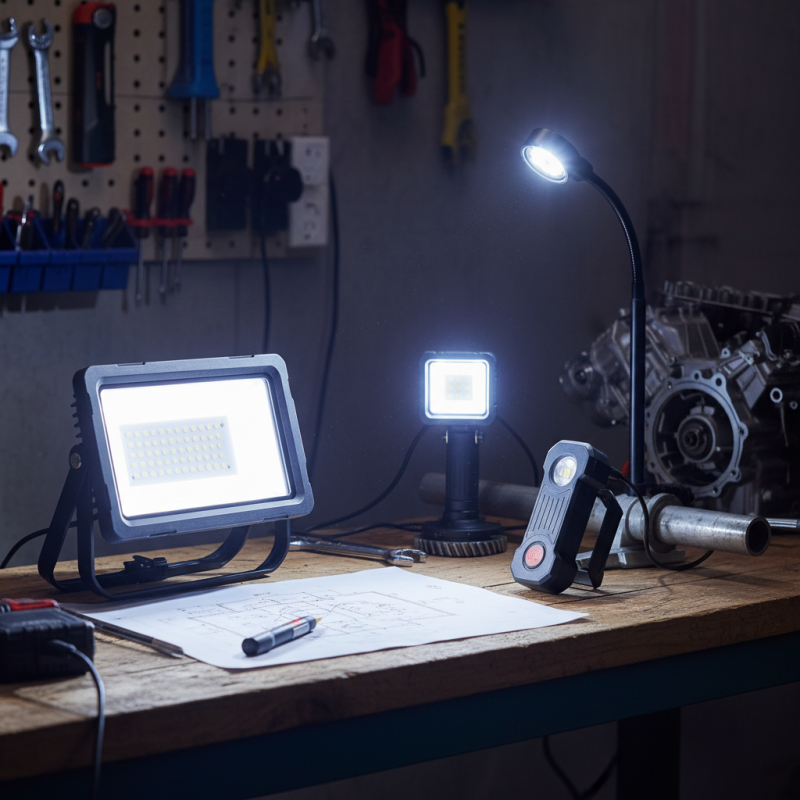
Understanding the Different Types of LED Work Lights Available
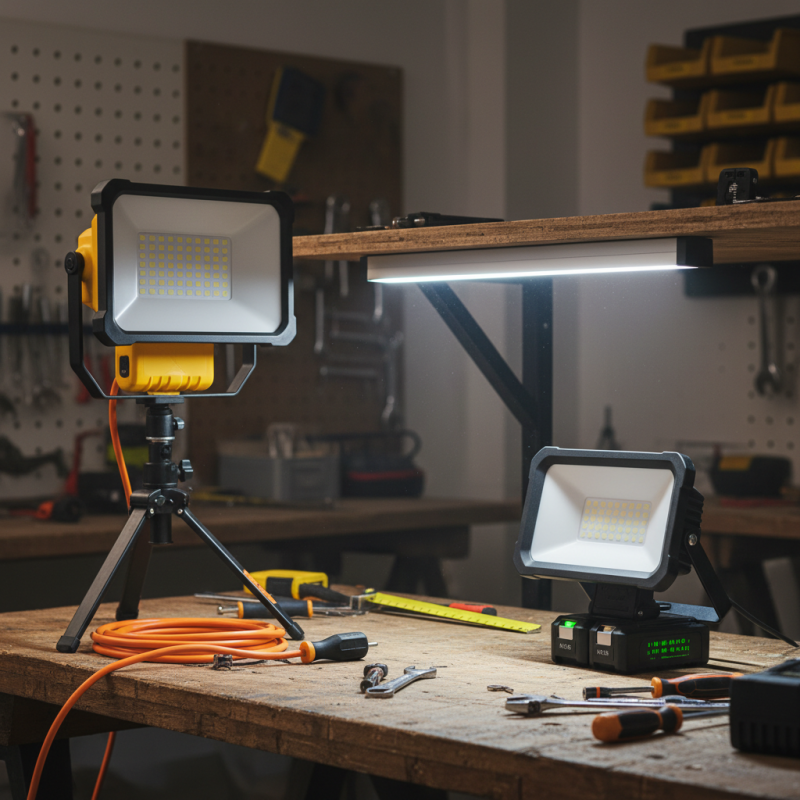
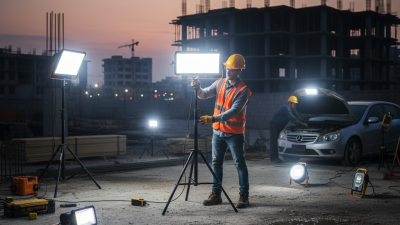
When choosing the best LED work light for your needs, it’s essential to understand the different types available in the market. LED work lights can generally be categorized into portable, fixed, and rechargeable options. Portable LED work lights are designed for versatility and ease of movement, making them ideal for construction sites or outdoor tasks. They usually come with a battery pack or a plug-in option, allowing for use in various environments. According to a report by Market Research Future, the global portable LED lighting market is projected to grow at a CAGR of 7.5% through the next five years, reflecting the increasing demand for flexible work solutions.
On the other hand, fixed LED work lights are often mounted to walls or ceilings and provide consistent lighting for a specific area, such as workshops or garages. These lights typically offer higher lumens output, ensuring bright illumination for detail-oriented tasks. A survey conducted by the American National Standards Institute (ANSI) found that proper lighting can improve productivity by up to 20% in industrial settings, underscoring the importance of selecting the right type of work light for stationary applications. Lastly, rechargeable LED work lights combine portability with convenience, offering built-in batteries that can be charged for continuous use. As more professionals seek sustainable solutions, this category is gaining traction, echoing the broader trend of integrating energy-efficient technologies in the workplace.
Key Factors to Consider When Choosing an LED Work Light
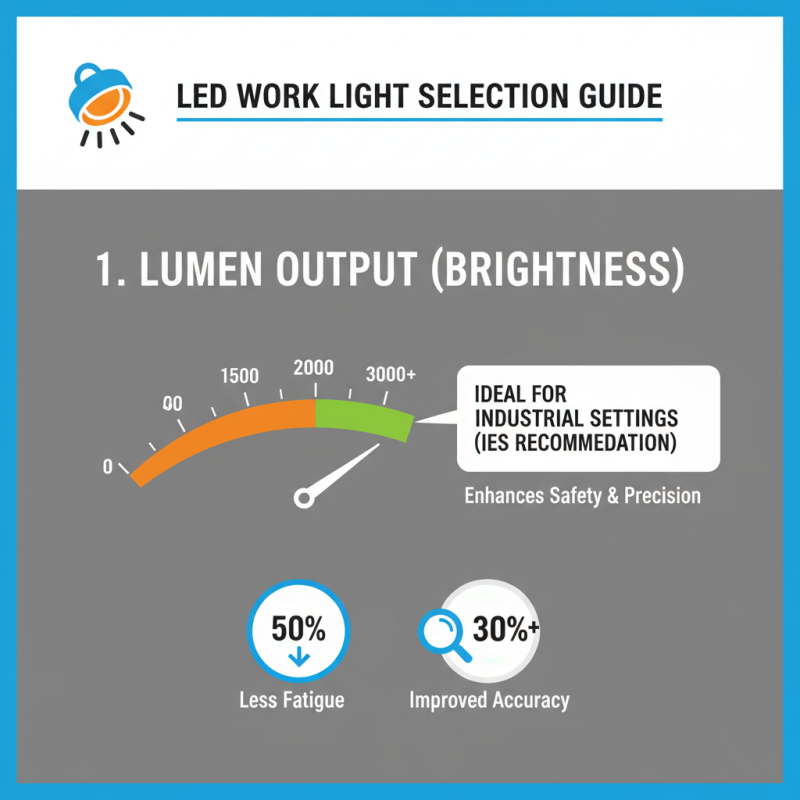
When choosing the best LED work light for your needs, several key factors should be taken into account. First, consider the lumen output, which measures the brightness of the light. According to the Illuminating Engineering Society, a work light should ideally provide between 1,500 to 3,000 lumens for effective visibility in industrial settings. The appropriate level of brightness can drastically improve safety and precision during tasks that require thorough attention to detail.
Another crucial aspect is the power source. LED work lights can be powered by AC, DC, or rechargeable batteries, each offering distinct advantages depending on your work environment. Recent reports from the Energy Information Administration indicate that battery-powered LED lights have gained popularity, showcasing a significant increase in efficiency and runtime—many models now exceed 20 hours of continuous use per charge. Additionally, consider the durability and weather resistance of the unit, especially for outdoor applications. A work light with an IP rating of at least IP65 is recommended for protection against dust and water, ensuring longevity and performance in various conditions.
Assessing Brightness and Light Output Requirements for Your Project
When selecting the best LED work light for your project, assessing brightness and light output is crucial. The brightness of a work light is typically measured in lumens, which indicates how much light is emitted. For tasks requiring detailed work, like electrical installations or intricate repairs, a higher lumen count is essential. Conversely, for general illumination in larger areas, a moderately bright light may suffice. Understanding the specific requirements of your environment will help in choosing the appropriate lumens, ensuring that you have adequate visibility without overwhelming glare.
Tips: Consider the color temperature of the light as well. Warmer temperatures (around 3000K) can create a more inviting atmosphere, whereas cooler temperatures (6000K and above) are better for clarity and visibility, especially in detailed tasks. Additionally, ensure the work light offers adjustable brightness settings; this feature will allow you to customize the output according to the specific needs of your project.
Another pivotal aspect is the beam angle of the light. A wider beam angle enhances coverage and reduces shadows, making it ideal for larger workspaces or outdoor settings. However, if you need to focus light on a specific area, a narrower beam may be more effective. Assessing both the beam angle and the placement of your work light can dramatically enhance the efficiency and quality of your work.
Evaluating Battery Life and Power Options for LED Work Lights
When selecting the best LED work light for your needs, evaluating battery life and power options is crucial. A longer battery life ensures that you can complete your tasks without interruptions, making it essential to consider the light’s runtime. Many models offer varying battery capacities, and choosing one that meets your specific usage patterns is advisable. For instance, if you frequently work long hours or in remote areas, opting for a work light with extended battery life or interchangeable batteries can be beneficial. Additionally, look for features like battery level indicators that can help you monitor the remaining power and avoid unexpected shutdowns.
Power options also play a significant role in the effectiveness of an LED work light. Consider whether you prefer rechargeable batteries or traditional disposable ones. Rechargeable lights provide convenience and cost savings over time, while models that use replaceable batteries can be advantageous in situations where charging is not feasible. Furthermore, many LED work lights offer the versatility of being powered by both AC and DC sources, allowing for greater flexibility in various work environments. Assessing these battery and power options will help ensure that you choose an LED work light that aligns with your specific needs and enhances your work efficiency.
How to Choose the Best LED Work Light for Your Needs? - Evaluating Battery Life and Power Options for LED Work Lights
| LED Work Light Model |
Battery Life |
Power Options |
Brightness (Lumens) |
Weight (lbs) |
Price (USD) |
| Model A |
6 hours |
Rechargeable Battery |
1000 |
3.5 |
49.99 |
| Model B |
8 hours |
AC/DC Adapter |
1200 |
4.2 |
59.99 |
| Model C |
5 hours |
Battery Pack |
800 |
3.0 |
39.99 |
| Model D |
12 hours |
Rechargeable Battery + Solar |
1500 |
5.0 |
89.99 |
| Model E |
10 hours |
AC Adapter |
2000 |
6.0 |
112.99 |
Examining Portability and Durability Features in LED Work Lights
When choosing an LED work light, portability and durability are two essential features that can significantly affect its usability in various conditions.
Portability ensures that you can easily transport the light to different job sites or adjust its position as needed. Consider the weight, size, and design of the work light; lightweight models with ergonomic handles or those that incorporate collapsible features can enhance convenience. Additionally, look for options with rechargeable batteries and a long battery life, allowing for flexibility in work locations without being tethered to a power source.
Durability is equally crucial, especially for those working in demanding environments. LED work lights should be constructed from robust materials that can withstand drops, bumps, or exposure to harsh weather conditions.
Features such as water resistance, impact resistance, and heat dissipation capabilities ensure that the work light remains functional over time, even in challenging situations.
Evaluating these aspects not only guarantees a better performance over the life of the product but also provides peace of mind, knowing that the work light can handle the rigors of daily use.