2026 How to Choose the Best LED Panel for Your Needs?
Choosing the right LED panel can be challenging. With various options available, consumers often feel overwhelmed. According to industry expert Dr. Emily Zhang, "The best LED panel meets your specific needs and preferences." This insight highlights the importance of understanding what you want before making a decision.
Each LED panel offers different features. Some provide bright, even lighting, while others may focus on energy efficiency or smart technology. Identifying your primary use case can clarify what to prioritize. For instance, if you're using it for photography, color accuracy will matter more.
Remember, not every LED panel will suit your room or purpose perfectly. Many factors come into play, like size, brightness, and design. It’s crucial to review your options carefully. Reflect on what works best for you. After all, your choice should enhance your environment and experience.
Understanding LED Panel Technology: Key Terms and Concepts
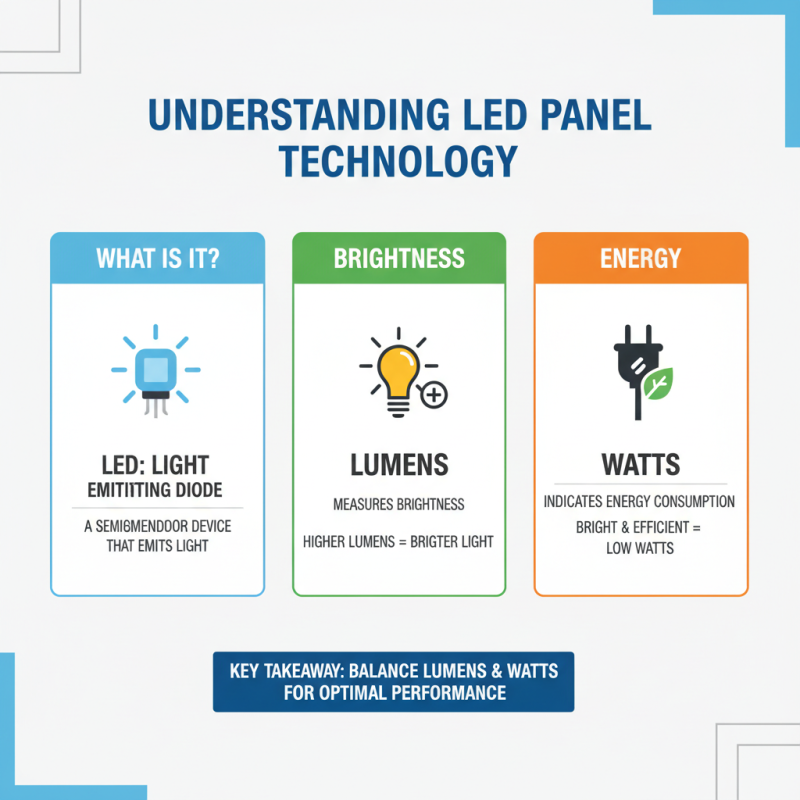
When selecting an LED panel, understanding technology is vital. LED stands for Light Emitting Diode. These panels come in different types and qualities. Key terms include lumens, which measure brightness. A high lumen count means a brighter light. In contrast, watts indicate energy consumption. A panel can be bright yet energy-efficient.
Another term to know is color temperature. It shows the warmth or coolness of the light. Measured in Kelvin, lower values mean warm light, while higher values indicate cool light. This affects ambiance. Selecting the right temperature for your space is crucial and often overlooked.
Lastly, consider the color rendering index (CRI). It measures how accurately colors appear under the light. A higher CRI provides a more vivid color experience. If you’ve chosen a panel with a low CRI, the colors may look dull. This detail often gets lost in the selection process. Pay attention to these concepts; they make a real difference in choosing the best LED panel.
Evaluating Brightness and Color Quality: Lumens vs. Color Temperature
When selecting an LED panel, brightness and color quality are crucial factors. Brightness is measured in lumens. A higher lumen count means a brighter light. For example, a panel with 1,000 lumens is suitable for a large room. However, too much brightness can create glare. Finding the right balance is essential.
Color temperature is another key aspect. It is measured in Kelvin (K). A lower Kelvin number means a warmer, yellow light. A higher number offers a cooler, blue light. Most offices prefer around 4,000K. A home setting might lean toward 2,700K for a cozy feel. Keep in mind that color quality can affect your mood.
Tips: Consider your space before purchasing. Test different settings. Don't rush; lighting impacts everything. Think about your daily activities. If tasks require focus, opt for a brighter panel. If relaxation is the goal, choose warmer tones. This simple decision can enhance your environment significantly. Evaluate options thoroughly to avoid future regrets.
Assessing Energy Efficiency: Understanding Watts and Lifespan
When choosing an LED panel, energy efficiency plays a crucial role. Understanding watts and lifespan can greatly impact your electricity bill and environmental footprint. According to a report by the U.S. Department of Energy, LED lighting can save up to 75% more energy than traditional incandescent bulbs. This translates into significant cost savings over time.
Wattage refers to the amount of energy a light panel consumes. Lower wattage usually means lower energy bills. However, it’s essential to balance wattage with brightness. For example, a panel with fewer watts may not meet your lighting needs effectively. A good rule of thumb is to look for LED panels that offer lumens output per watt.
Tips:
When evaluating LED panels, check their lifespan ratings. Many high-quality options last over 25,000 hours. This longevity contributes to less frequent replacements and lower waste.
Consider the specific lighting needs for your space. A panel that works perfectly in one room may not suffice in another. Experiment with different wattages to find the optimal fit. Remember, not all LED panels are created equal, and it’s worth reassessing your choices frequently to ensure you’re getting the best efficiency and performance possible.
Size and Format Considerations: Choosing Dimensions for Your Space
When selecting an LED panel, size and format are crucial. Before diving into specifics, measure your space precisely. Consider where you intend to place the panel. Different rooms may require different dimensions. A larger panel can dominate a small space, while a tiny panel might get lost in a grand room. It’s a balance.
Think about the viewing distance as well. The ideal size varies based on how far away you will be. For instance, from a distance of 10 feet, a 55-inch panel may suffice. However, if you’re frequently closer, you might need something bigger. Visual clarity is essential in ensuring an immersive experience.
Reflect on your intended use, too. Will the panel be for presentations, streaming, or art displays? Each purpose can influence your size choice. A panel meant for vibrant visuals may need a different aspect ratio. Examine these details critically. Overlooking them could lead to space inefficiencies. Select wisely to create an optimal viewing environment that meets your needs.
Choosing the Right LED Panel Size for Your Space
Budgeting for Quality: Comparing Costs and Performance in LED Panels
When budgeting for LED panels, it's essential to evaluate both costs and performance. Industry reports indicate that costs can vary widely. A standard LED panel may range from $50 to $300. Prices depend on technology and features. Higher resolution panels generally cost more. Yet, affordable options can still offer decent quality.
Performance metrics are crucial. Brightness, measured in lumens, should match your environment. A panel emitting 3000 lumens is suitable for well-lit spaces. In contrast, a 1000-lumen panel thrives in darker settings. Energy efficiency is another critical factor. Models consuming less power can save more over time. According to energy reports, an efficient LED panel may cut costs by 30% or more over its lifespan.
However, it's not just about the numbers. Some panels may have color accuracy issues, affecting visuals. Users should carefully assess their specific needs. Poor choices can lead to dissatisfaction. Testing panels before purchasing can help ensure they meet expectations. Ultimately, while budgeting is vital, performance should not be sacrificed for the price alone.