How to Choose the Best Solar Street Light for Your Needs?
Choosing the right solar street light involves understanding your specific needs and the options available. In the industry, a report by the International Renewable Energy Agency (IRENA) indicates that solar street lights can lead to a 25% reduction in energy costs for municipalities. This illustrates their potential for widespread use.
"Investing in solar street lights is not just about saving money; it's about empowering communities," says Dr. Jane Watts, a solar energy expert. Her insight highlights the dual advantages of solar street lights: sustainability and community improvement.
Despite the clear benefits, challenges remain. Some products lack durability. Others don't perform well in low sunlight areas. Making an informed choice becomes crucial. Consider factors like battery life, brightness, and installation locations. This approach can maximize the impact of solar street lights on local environments.
Understanding Solar Street Light Types: LED vs. Traditional Options
When choosing solar street lights, one key decision is the type:
LED or traditional. LED lights
offer bright illumination with lower energy consumption. They can last up to 50,000 hours,
reducing replacement costs. Traditional options, usually using incandescent bulbs, might initially seem cheaper.
However, they consume more power and have a shorter lifespan, making them less economical long-term.
Consider the brightness and solar efficiency of each option. LED lights
provide various brightness levels, catering to different environments. Traditional street lights may lack this versatility.
Installation is another point to think about. LED systems often require less
maintenance due to their durability. Traditional systems can become obsolete quickly and may need frequent repairs.
It’s essential to consider your specific needs. Take into account the area’s size and lighting requirements.
Additionally, think about the initial investment versus long-term savings. Sometimes, the upfront cost of
LEDs feels daunting. However, evaluating their longevity and efficiency might change
your perspective. Each choice has its drawbacks, so understanding these is crucial. Reflecting on these factors will guide
you to the right decision.
Evaluating Lighting Requirements: Lumens, Coverage, and Height Specification
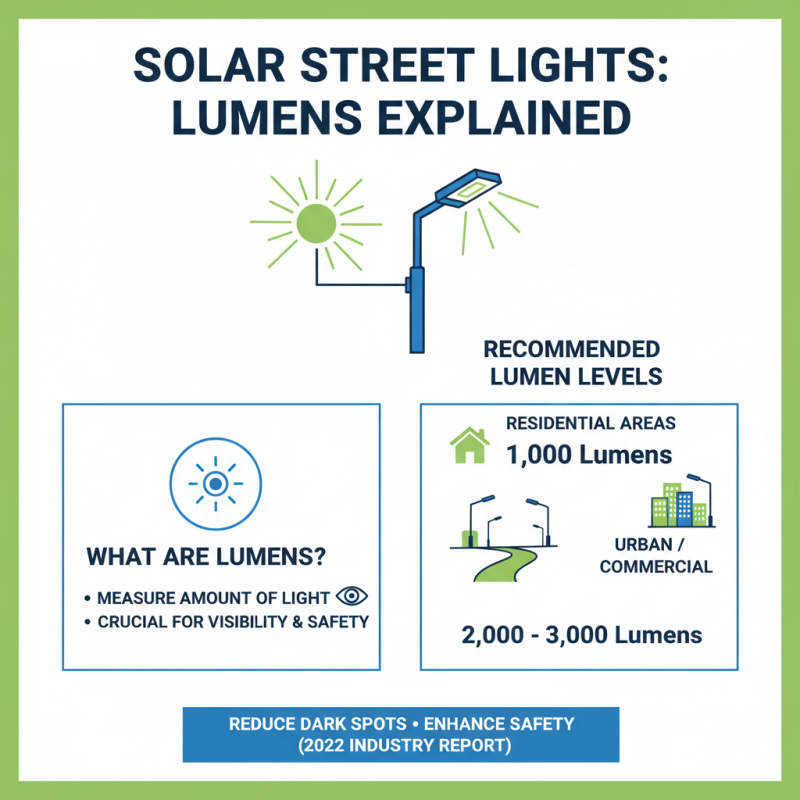
When selecting solar street lights, understanding lumens is crucial. Lumens measure the amount of light emitted. A street light providing 1,000 lumens is generally bright enough for residential areas. Urban applications may need 2,000 to 3,000 lumens for adequate coverage. According to a 2022 industry report, proper lumen levels can enhance safety and visibility, reducing dark spots.
Coverage area is another key factor. The spacing between lights depends on the lumen output. Typical installations suggest a distance of 20 to 30 feet for optimal light distribution. When planning installations, you should consider the height at which lights are mounted. Height can affect the light's reach. A light installed 15 feet high will illuminate a wider area than one at 10 feet. However, the trade-off can be uneven light. Shadows can still appear, leading to safety concerns.
Finally, don’t overlook adjustments based on your environment. Street layout, tree canopy, and local weather conditions can impact light effectiveness. Not every installation will have ideal conditions. Analyze the specific requirements of your location carefully. Sometimes, collaboration with lighting professionals can provide insights that data alone might not reveal.
Key Features: Motion Sensors, Solar Panels, and Battery Capacity Explained
When choosing a solar street light, three key features stand out:
motion sensors,
solar panels, and
battery capacity.
Motion sensors are essential for ensuring energy efficiency. They activate the light only when movement is detected, saving power.
Consider how sensitive the sensor is. It should respond to pedestrians but not trigger with passing animals.
Solar panels are the heart of any solar light system. They convert sunlight into energy. Look for panels with higher efficiency ratings.
A well-placed solar panel ensures ample sunlight during the day.
Think about the location where you will install the light.
Trees and buildings can obstruct sunlight, affecting efficiency.
Battery capacity is equally important. A light with a large battery can operate longer during cloudy days.
However, larger batteries might take up more space.
Ensure the battery is durable and weather-resistant to withstand harsh conditions.
It's also vital to check how easily you can replace the battery if needed.
Productivity often requires trade-offs, and each feature has its pros and cons.
Assessing Installation and Maintenance Factors for Solar Street Lights
When choosing a solar street light, installation and maintenance are crucial. Proper assessment of your needs can save time and effort later. Consider the mounting options. Some lights are pole-mounted, while others need concrete bases. Ensure you have the right tools and expertise for the installation.
Tips: Choose a location that maximizes sunlight exposure. Do not place the lights under trees or overhangs. Check for nearby power lines and other obstacles.
Maintenance is often overlooked. Solar lights need regular cleaning to remove dust and debris. This can boost efficiency. Battery performance should be monitored as well. Over time, batteries may lose their capacity. If replacements are needed, be prepared to change them.
Tips: Schedule maintenance checks every six months. Keep a record of any issues that arise. This can help in making informed decisions in the future.
Analyzing Cost-Effectiveness: Initial Investment vs. Long-Term Savings in Energy
When selecting solar street lights, cost-effectiveness plays a significant role. The initial investment can seem high, but long-term savings often justify it. Many people overlook maintenance costs and replacement needs. Solar lights generally require less upkeep than traditional systems. This can lead to substantial savings over time.
Consider the energy savings. Solar lights use sunlight, reducing electricity bills. Depending on location, this can amount to significant sums yearly. Some may argue that initial costs are daunting. Yet, after several years, these lights can pay for themselves. It can be hard to visualize these long-term benefits at first.
Investing in solar street lights is not merely about upfront expenses. Reflect on how much energy will be saved. The environmental impact is another factor to consider. Still, individuals should examine their specific needs before making a decision. Not every system suits every area. Balancing these factors can be challenging yet rewarding in the end.
How to Choose the Best Solar Street Light for Your Needs? - Analyzing Cost-Effectiveness: Initial Investment vs. Long-Term Savings in Energy
| Type of Solar Street Light |
Initial Investment ($) |
Annual Maintenance Cost ($) |
Average Lifespan (Years) |
Annual Energy Savings ($) |
Total Savings Over Lifespan ($) |
| Standard Solar LED Light |
$1,500 |
$50 |
10 |
$200 |
$2,000 |
| Smart Solar LED Light |
$2,000 |
$75 |
15 |
$300 |
$4,500 |
| High-Powered Solar Street Light |
$3,000 |
$100 |
20 |
$400 |
$8,000 |