How to Choose a Forklift Collision Detection System?
In the busy world of warehouses and manufacturing, safety is paramount. Choosing a reliable Forklift Collision Detection System can significantly reduce accidents. According to industry expert John Smith, "Selecting the right system is essential for ensuring a safe operational environment." This highlights the importance of making informed decisions.
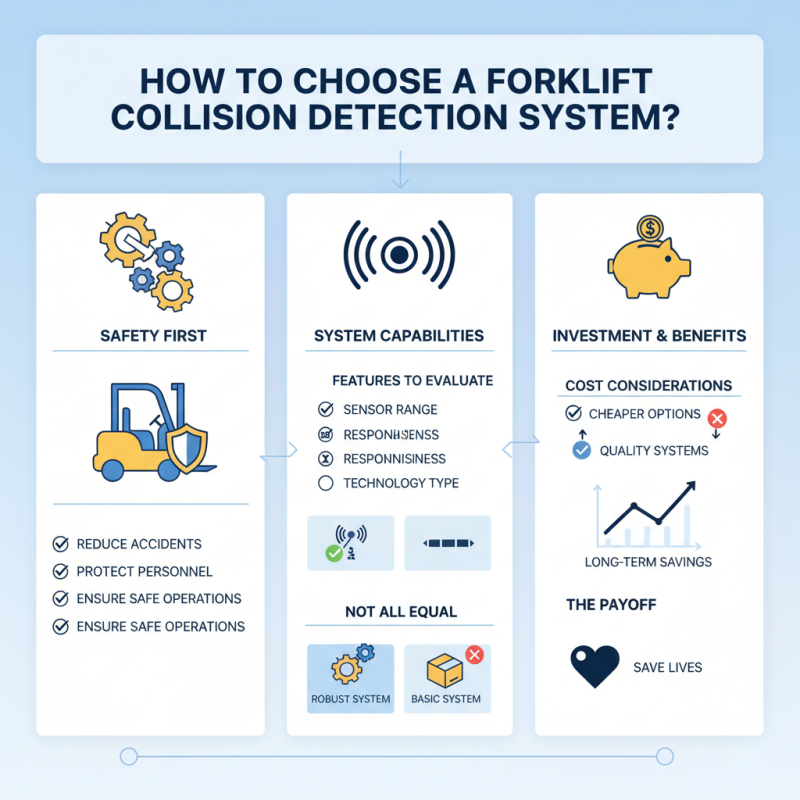
Understanding the capabilities and limitations of various systems is key. An effective Forklift Collision Detection System can help prevent accidents. Yet, not all systems are created equal. Features vary drastically between manufacturers. Evaluating a system's sensor range and responsiveness is critical in ensuring employee safety.
Additionally, the cost of these systems varies widely. It can be tempting to opt for cheaper options, but this may lead to compromises in safety. Businesses must assess their specific needs. Remember, a well-chosen Forklift Collision Detection System could save lives. Investing thoughtfully will yield long-term benefits for everyone involved.
Understanding the Importance of Forklift Collision Detection Systems
Forklift collision detection systems are vital for enhancing safety in warehouses and manufacturing plants. Statistics show that 20% of workplace injuries involve forklifts. These systems help prevent accidents that can lead to severe injuries or property damage. They use sensors and cameras to detect obstacles. Real-time alerts can minimize the risk of collisions.
In a recent report, around 65% of companies report a safety improvement after implementing these systems. Workers become more aware of their surroundings. However, not all systems are equally effective. Some may have blind spots or latency issues. It’s essential to evaluate different technologies.
A forklift collision detection system should cater to your specific environment. Consider factors like warehouse layout and the types of materials being moved. Engaging with a variety of systems can help identify strengths and weaknesses. For instance, some devices may falter in busy areas. It's important to incorporate feedback from your team, as their insights can guide your decision.
How to Choose a Forklift Collision Detection System?
| Feature | Importance | Considerations |
| Sensor Type | Critical for detecting obstacles | Lidar, Ultrasonic, or Camera-Based |
| Range | Determines detection capability | Short-range (up to 5m) or Long-range (over 20m) |
| Response Time | Affects the system's effectiveness | Milliseconds are ideal |
| Integration Capabilities | Enables seamless technology usage | Wireless or Wired options available |
| User Interface | Ease of use for operators | Touchscreen or App-based systems |
| Cost | Budget consideration | Initial vs. long-term ROI |
| Maintenance Requirements | Impact on operational uptime | Routine checks and software updates |
Key Features to Look for in a Collision Detection System
When selecting a forklift collision detection system, focus on essential features. One key aspect is sensor range. Sensors should effectively cover the operational area. This ensures early warnings. Systems with adjustable ranges can adapt to different environments. Flexibility in settings is crucial.
Another important feature is alert mechanisms. The system should include both visual and auditory alerts. Visual warnings, like lights, can grab attention. Sound alerts can be effective in busy environments. Look for systems that offer customization. Tailoring alerts to specific needs enhances effectiveness.
Integration capabilities matter too. The collision detection system should connect with existing equipment. It should also easily integrate with warehouse management systems. This ensures seamless operation. Training is crucial as well. Employees must understand how to respond to alerts. Regular drills might improve readiness. Reflecting on these aspects ensures a safer working environment.
Evaluating Technology Options for Forklift Safety Solutions
Forklift safety is crucial in industrial environments. A collision detection system can significantly reduce accidents. Recent reports show that about 85% of forklift accidents involve pedestrian injuries. Selecting the right technology is essential for enhancing safety.
When evaluating options, consider the system's features. Some systems use cameras and sensors to detect obstacles. Others rely on RFID technology to track assets. Both have their advantages and drawbacks. For instance, camera systems can provide real-time visuals, but they might require regular maintenance. In contrast, RFID systems are typically easier to deploy but may have limited range.
**Tip:** Assess your facility's layout. Narrow aisles may benefit from camera systems that provide a wider view. Don't forget about employee training. From tech setup to ongoing usage, their understanding is vital.
In a rapidly evolving market, prioritize adaptability. New technologies emerge frequently. It's not uncommon for systems to become outdated. Choose a system that can integrate new features. Regular evaluations of your chosen technology will ensure optimal safety measures.
**Tip:** Monitor the effectiveness of the collision detection system. Solicit feedback from staff and make adjustments when necessary. Continual improvement is key to reducing risks.
Forklift Collision Detection System Technology Evaluation
Assessing Compliance with Industry Safety Standards
When selecting a forklift collision detection system, it’s essential to assess compliance with industry safety standards. According to the Occupational Safety and Health Administration (OSHA), approximately 20,000 forklift accidents occur yearly in the U.S. alone. These incidents often result in severe injuries or fatalities, highlighting the importance of implementing effective safety measures. A system that aligns with safety standards can significantly reduce these risks.
Tips: Evaluate the system's technology. Ensure it uses reliable sensors. Investigate its performance in real-world situations, not just simulations.
Many companies underestimate the installation and maintenance of these systems. The National Safety Council reports that up to 70% of all forklift incidents are preventable. Compliance checklists often overlook ongoing training and system evaluations. Regular updates and assessments are crucial for maintaining safety compliance. Do not wait for an accident to act.
Tips: Involve your team in assessments. Collect their feedback before finalizing any system. Their experience offers valuable insights.
Investing time and resources into the right detection system is not just about compliance; it’s about fostering a safer work environment for everyone involved.
Implementing and Maintaining Your Collision Detection System
Implementing a collision detection system for forklifts requires careful planning and attention. Start by assessing the layout of your worksite. High-traffic zones need different solutions than quieter areas. Also, consider the types of equipment used. Some systems work better with specific machinery. Take the time to understand your environment and your needs.
Tips: Regularly evaluate system performance. Is it catching issues promptly? Keep logs of near misses. This data helps identify patterns. You may find blind spots that you hadn't considered.
Ongoing maintenance is crucial for keeping the system effective. Train staff on how to operate the system efficiently. A lack of training can lead to misuse. Schedule routine checks to ensure the equipment remains in good condition. Even minor flaws can create risks.
Tips: Engage your team. Seek their feedback on the system’s functionality. They may point out challenges you’ve overlooked. Include collision detection in safety meetings. Constant engagement promotes better safety awareness.