20 Tips for Choosing the Best LED Wall for Your Business Needs?
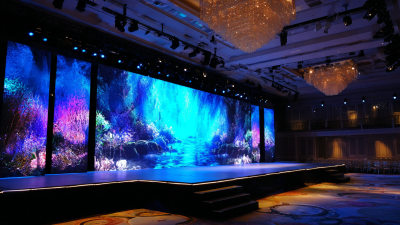
When selecting a LED wall for your business, the process can be daunting. With so many options on the market, understanding your specific needs is crucial. According to industry expert John Harper, a renowned consultant in digital displays, “Choosing the right LED wall can elevate your brand's presence dramatically.” His insight highlights how essential it is to make informed decisions.
LED walls come in various sizes, resolutions, and technologies. Each factor significantly impacts the performance and effectiveness of your display. Yet, many businesses overlook critical aspects, such as brightness and viewing angles. These elements are vital in ensuring your message reaches your audience effectively. It’s easy to get lost in specifications and forget about your core objectives.
Reflecting on your business goals can help narrow your choices. Whether it's for a retail space, event, or corporate environment, a tailored LED wall can make a difference. However, caution is needed here. Not all options may align with your needs over time. Thus, thorough research and expert guidance are fundamental to avoid costly mistakes.
Understanding LED Wall Types: Indoor vs Outdoor Requirements
Choosing between indoor and outdoor LED walls requires careful consideration. Indoor LED walls are designed for controlled environments, often featuring higher pixel densities. These displays are ideal for presentations, retail environments, and events where clarity is crucial. The brightness levels in these walls are lower compared to outdoor ones, which helps avoid glare and ensures visual comfort.
Outdoor LED walls serve a different purpose. They need to withstand harsh weather conditions and have higher brightness levels. These walls often come with robust protection against moisture and dust. When selecting an outdoor wall, assess the location's sunlight exposure to ensure visibility. Additionally, reflect on how the wall will integrate into the surrounding architecture and landscape.
Both types have unique requirements. It's vital to consider viewing distance, installation space, and usage frequency. Understanding these differences will enhance your decision-making. An LED wall should not only meet your immediate needs but also adapt as your business evolves. Choosing wisely can lead to significant long-term benefits.
Evaluating Brightness Levels: Nits and Their Impact on Visibility
When selecting an LED wall for your business, brightness is a crucial factor. Brightness is measured in nits, a unit that quantifies how much light is emitted from a surface. For indoor use, a brightness level of around 300 to 500 nits is typically sufficient. However, outdoor environments demand much higher brightness. Reports indicate that 1,500 to 3,000 nits are necessary for optimal visibility under direct sunlight.
The impact of brightness on visibility cannot be overstated. High brightness levels enhance clarity and ensure that your message is seen, even from a distance. For instance, an LED display with 2,500 nits will stand out in bright conditions, whereas one with only 800 nits may get washed out. This aspect significantly affects viewer engagement and brand exposure. Businesses often overlook this when selecting LED walls, leading to potential visibility issues.
It is essential to consider your specific environment. If your location is shaded or has low ambient light, lower nits will suffice. Conversely, bright settings require careful evaluation of brightness to avoid losing potential customers. This reflection on light levels ensures you make an informed decision, maximizing your investment in LED technology.
Determining Optimal Resolution: Pixel Pitch and Its Importance for Clarity
When selecting an LED wall for your business,
pixel pitch plays a crucial role in achieving optimal resolution.
Pixel pitch, defined as the distance between the center of one pixel to the center of the next, directly impacts clarity.
A lower pixel pitch, such as 1.5 mm, provides higher resolution.
This means sharper images and text, which is essential for capturing attention.
Industry reports often highlight that screens with a pixel pitch of 2 mm or lower can significantly enhance visual experiences, particularly in retail environments.
Additionally, the viewing distance should correlate with pixel pitch.
For example, a screen with a 2 mm pixel pitch is best viewed from about 10 feet away.
Research indicates that viewers may struggle to discern details beyond the optimal range.
Businesses should assess their audience's proximity and adjust pixel pitch accordingly.
However, investing in higher resolution displays can be costly.
Balancing quality with budget constraints can create challenges, and it's essential to analyze the specific needs of your environment.
Incorporating this knowledge can significantly boost your visual communication strategy.
However, not all business settings require ultra-high resolutions.
For some, a pixel pitch of 3 mm may suffice, especially in larger venues.
Reflecting on the cost versus benefit ratio is vital when choosing the right resolution.
Consider both current and future demands to ensure your investment serves your business well for years to come.
Assessing Cost vs. Value: Budget Considerations in LED Wall Selection
When selecting an LED wall for your business, cost versus value is crucial. Understanding your budget helps in making informed choices.
Determine what features matter most—brightness, resolution, or portability. A cheaper option may seem appealing but could lack essential features.
Don't sacrifice quality for a lower price.
Consider the longevity of the LED wall. Higher quality displays often have better durability. They might cost more upfront but could save money in repairs and replacements over time.
Think about the total cost of ownership. Will your choice meet your business’s needs long-term?
Review your specific use cases. Will the LED wall be used for marketing, presentations, or entertainment?
Scenarios can drastically influence the necessary specifications. A display that shines in direct sunlight has a different cost compared to one used indoors.
Reflect on these aspects carefully; choosing solely on price could lead to regret later.
Exploring Installation and Maintenance: Long-term Operational Costs
When selecting an LED wall, installation and maintenance are critical factors. The right installation ensures long-term performance. A poorly installed wall may lead to frequent issues. Costs can escalate quickly if you need regular repairs. Therefore, hire experienced technicians for the setup. They will consider structural requirements and electrical systems. Their expertise often reduces future problems and expenses.
Regular maintenance is another aspect to consider. LED walls require periodic checks to function well. Dust can accumulate and affect brightness, while software updates can improve efficiency. You may need a dedicated technician for this. It’s an investment that saves costs in the long run. The decision might be tough, but neglecting it can lead to larger headaches. Reflect on your choices, and consider how each will impact your operational budget. Each component of the installation is crucial for reliability.
Cost Comparison of LED Wall Types for Business Needs