Essential Tips for Choosing the Best Solar Lights for Your Home?
When considering home improvement, solar lights are a practical choice. They provide illumination without raising energy bills. The variety of solar lights available can be overwhelming. You might feel lost in options ranging from pathway lights to wall sconces.
Finding the best solar lights requires thoughtful evaluation. Not all products deliver consistent brightness or durability. Some may look appealing but fail in performance over time. It’s essential to assess every aspect, from battery life to design. Don't ignore the reviews; they reveal a lot about how a product performs in real life.
Think about your outdoor space. Where do you need light the most? Does the style of the solar lights match your home? These details matter. Choosing solar lights is not just about function; it’s also about aesthetic appeal. Mistakes can be costly, and learning from them is crucial in making the right decisions.
Understanding Different Types of Solar Lights and Their Applications
When selecting solar lights, understanding their types is crucial. There are pathway lights, floodlights, and decorative options.
Pathway lights guide your way, illuminating walkways and driveways. They often come in various designs and heights. Some may even fade in brightness on cloudy days.
Floodlights provide powerful illumination. They can be used for security purposes, lighting up large areas. It might feel overwhelming to choose the right brightness level. Also, some models may not last as long as expected. Decorative lights, such as garden stakes and string lights, enhance ambiance. They add charm to outdoor spaces. However, be cautious—many decorative options may offer limited functionality.
Consider the solar panel's efficiency when choosing lights. Not all panels perform well in low sunlight conditions. Poor efficiency may lead to insufficient charging on cloudy days. Ensure you assess the placement and direction of solar panels carefully. They need direct sunlight for optimal performance. Reflect on your needs carefully. Different applications require different solutions, and each choice involves trade-offs.
Key Factors to Consider When Choosing Solar Lights for Your Home
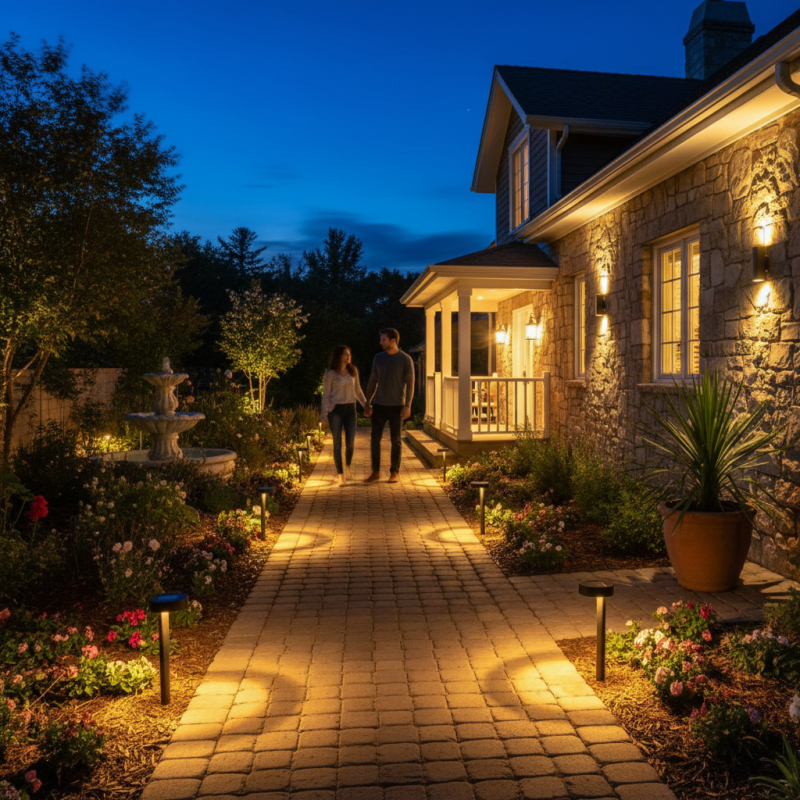
When choosing solar lights for your home, consider the location. Placement affects performance and aesthetics. Are you lighting a pathway or a garden? Different needs require different solutions. For pathways, look for lights that offer a low profile. This prevents obstruction and enhances safety.
Next, think about brightness and color temperature. Lumens measure brightness; higher lumens mean brighter light. A warm white light creates a cozy atmosphere. Cooler whites can resemble daylight, which is great for security. Check specifications to match your needs. Some people overlook this detail, leading to unsatisfactory results.
Battery life is another crucial aspect. Quality solar lights should last through the night. But, not all models perform equally. Some users find their lights dim by midnight. Make sure to read reviews on battery lifespan. This helps avoid disappointment. Remember, durability matters as well. Materials should withstand weather conditions. Poorly made lights can break easily, requiring costly replacements.
Evaluating Lumens and Brightness for Effective Outdoor Lighting
When selecting outdoor solar lights, the evaluation of lumens and brightness is crucial. Lumens measure how much light a fixture emits. For adequate outdoor lighting, a range of 100 to 200 lumens per fixture is often recommended. This level can effectively illuminate pathways, gardens, and decks, providing safety and aesthetic appeal.
Many homeowners underestimate this aspect. It’s easy to think that any solar light will suffice. However, dim lights may leave areas dark, creating unwanted hazards. According to a report by the American Lighting Association, effective outdoor lighting enhances safety by up to 30%. A properly lit environment reduces the risk of accidents and crime. Ideally, brighter lights—between 300 to 500 lumens—work well for security purposes around entry points.
Choosing the right brightness can be tricky. Some lights may boast high lumens but lack longevity. Assessing battery life and solar panel efficiency is equally important. Unfortunately, many products fail to deliver consistent performance. It’s essential to research and consider these factors thoroughly. Aim for a balanced approach that prioritizes both illumination and durability.
Comparison of Solar Light Types by Lumens Output
Assessing Battery Efficiency and Solar Panel Quality in Solar Lights
When selecting solar lights, battery efficiency and solar panel quality are crucial. The lithium-ion batteries commonly used in solar lights typically offer good performance with lifespans ranging from two to five years. However, not all batteries are created equal. A report from the National Renewable Energy Laboratory (NREL) indicates that efficient batteries can store up to 90% of solar energy produced. This indicates that a higher quality battery can significantly improve nighttime illumination.
Solar panel quality is equally important. High-efficiency solar panels convert more sunlight into energy. According to the Solar Energy Industries Association (SEIA), panels with a conversion efficiency above 20% can provide more reliable performance. Some products still rely on lower-grade panels, which may only convert 15% of sunlight. This difference can lead to inadequate lighting when you need it most.
Additionally, look for indicators of durability. Some lights are not weather-resistant, which can affect their efficiency and lifespan. Investing in models with robust design will prevent energy loss due to environmental damage. Be mindful that even well-reviewed models may not meet expectations in every situation. Consider local climate and sunlight exposure when choosing.
The Impact of Weather Resistance Ratings on Solar Light Durability
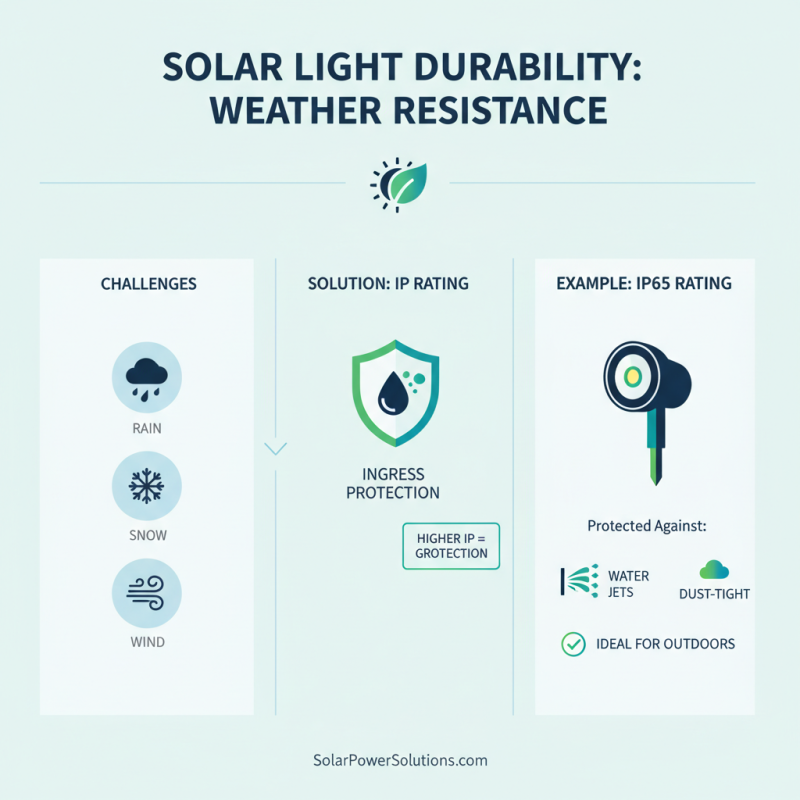
When choosing solar lights, durability is key. Weather resistance ratings play a critical role here. Solar lights face rain, snow, and wind. Selecting lights with high IP ratings ensures longevity. For example, lights with an IP65 rating can withstand water jets and dust. This level of protection is ideal for outdoor environments.
The National Renewable Energy Laboratory reports that weather impacts solar light efficiency. High humidity can reduce battery performance. Cold temperatures may shorten the lighting duration. Thus, assessing durability against local weather patterns is essential. Look for products specifically tested for extreme conditions. These lights will likely last longer in unpredictable climates.
Many consumers overlook the importance of material quality. Cheap plastics can deteriorate quickly in sunlight. Metal frames may rust if not treated properly. Choosing quality materials may require a higher upfront cost. However, this investment pays off over time. Think about the long-term value and maintenance costs involved. A durable solar light makes a smarter choice for your home.