Top Tips for Choosing the Best LED Flood Lights for Your Needs?
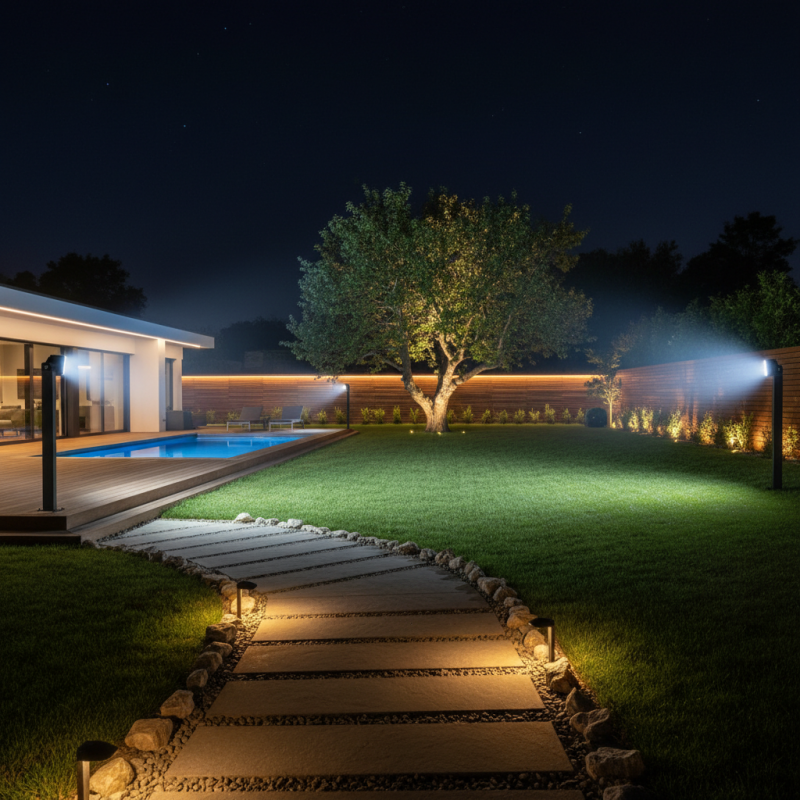
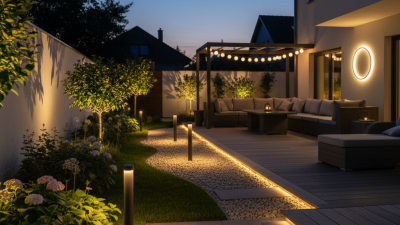
Choosing the right LED flood lights can greatly enhance your outdoor spaces. With numerous options available, making the best choice is crucial. Lighting can transform a backyard, ensuring safety and visibility during the night.
LED flood lights come in various styles and brightness levels. Understanding your specific needs is essential. Do you need lights for security, aesthetics, or both? Consider the area you intend to illuminate. The size and layout of your space play a significant role in determining the type of lights you should choose.
Reflecting on product quality is important. Do they offer energy efficiency, longevity, and appropriate brightness? Examining product specifications helps. Seeking advice from professionals can also guide you toward reliable brands. In the end, investing time in research will pay off with the right LED flood lights for your needs.
Understanding the Different Types of LED Flood Lights Available
When considering LED flood lights, it's essential to understand the types available.
Residential, commercial, and industrial flood lights serve different purposes.
Residential lights often focus on home security and outdoor aesthetics. They typically have lower wattage but provide sufficient brightness for lighting pathways and gardens.
Commercial options, on the other hand, are designed for larger spaces, such as parking lots or building exteriors.
These lights generally offer higher lumen outputs and durability.
Industrial flood lights are built to withstand harsh environments, ideal for warehouses or construction sites.
They are robust and maintain performance under extreme conditions.
Reflecting on your needs can save time and money. It's easy to choose based on brightness alone, but consider
beam angle and color temperature.
A broader beam covers more area, while a cooler color temperature can enhance security. Each choice carries pros and cons.
It can be challenging to find the perfect fit, but investing time in understanding these factors will pay off in the long run.
Evaluating Brightness and Lumen Output for Proper Illumination
When selecting LED flood lights, evaluating brightness and lumen output is critical. Lumen output indicates the light's brightness. Higher lumens result in a brighter space. For wide areas, consider lights with at least 800 lumens. However, over-bright lighting can create glare. Use caution to balance brightness and comfort.
To illustrate, if you're illuminating a backyard, assess how many lumens you need. For pathways, about 100-200 lumens per fixture may suffice. For sports or large gatherings, aim for 700-1,200 lumens. Ensure the light distribution covers the desired area without excessive shadows.
A crucial tip is to check the color temperature. This affects ambiance and visibility. Warmer lights (2700K-3000K) create a cozy atmosphere. Cooler lights (5000K-6500K) enhance visibility for security. Experiment with various temperatures before settling. Be aware that some users prefer different shades. Adjust based on personal needs to find the right fit.
Assessing Energy Efficiency Ratings and Lifespan of LED Flood Lights
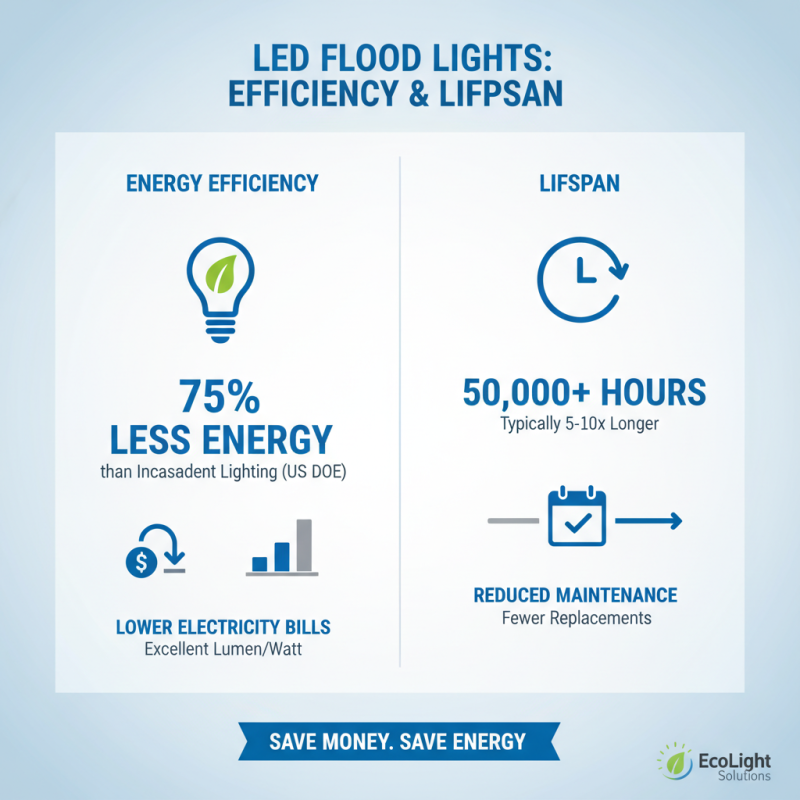
When evaluating LED flood lights, energy efficiency and lifespan are crucial factors. According to the U.S. Department of Energy, LED technology can use 75% less energy than traditional incandescent lighting. The efficiency ratings can vary, impacting your electricity costs over time. An energy-efficient LED fixture can significantly reduce your monthly bills, and many offer excellent lumen output per watt.
Lifespan is another pivotal aspect to consider. Quality LED flood lights can last between 25,000 to 50,000 hours. Studies indicate that most LEDs dim over time rather than burn out suddenly. This gradual dimming often goes unnoticed until the light’s effectiveness declines. Selecting lights with longer lifespans can minimize replacement frequency, resulting in lower long-term costs.
However, not all LED flood lights are created equal. Variations in manufacturing can lead to inconsistencies in performance and longevity. Consumer reports often highlight durability issues in cheaper models. Conducting thorough research is crucial to ensure you are making an informed decision. Seeking professional insights and verified user experiences can help mitigate the risk of purchasing subpar products.
Choosing the Right Beam Angle for Your Specific Lighting Needs
When selecting LED flood lights, the beam angle plays a crucial role in meeting your specific lighting needs. Narrow beam angles, typically around 15 to 30 degrees, offer focused illumination. This is ideal for highlighting architectural features or specific areas, like a garden statue or building facade. A narrower angle provides intensity, but it may leave some areas dark. It’s essential to consider what you want to highlight.
In contrast, wider beam angles, ranging from 60 to 120 degrees, provide a more diffused light. This is effective for illuminating larger areas, such as driveways or sports fields. A wider spread reduces shadows but can lessen brightness in targeted spots. Remember, achieving the perfect balance often requires experimentation with different angles. Keep track of how each setting affects your space. Only through trial and error can you find the best fit for your environment.
Evaluating your space is critical. High ceilings may need narrow spots, while low ceilings benefit from broad beams. Measure distances and understand how beam angles interact with your surroundings. Take note of areas that remain dim even after adjustments. This reflection will guide you to make more informed choices, ensuring that the LED flood lights serve their purpose efficiently.
Considering Installation Requirements and Environmental Factors
When selecting LED flood lights, installation requirements must be thoroughly considered. The mounting height plays a crucial role in how effectively the lights illuminate an area. According to the Illuminating Engineering Society, mounting flood lights between 15 to 30 feet high is often optimal for commercial spaces. However, for residential use, lower heights may suffice, particularly in outdoor settings like patios or gardens.
Environmental factors are equally critical. Locations exposed to severe weather conditions require more robust fixtures. Data from the U.S. Department of Energy indicates that lights rated for wet or damp locations can last significantly longer when installed outdoors. This durability is essential in areas prone to rain or snow. Reflecting on energy efficiency is vital as well; lights with higher lumen output per watt are more suitable for larger spaces.
Thinking ahead can prevent future adjustments. Evaluate how light will interact with nearby structures or landscaping. Poor positioning can lead to unwanted glare or shadows. A poor choice in fixture or placement may necessitate costly changes later. Keeping these considerations in mind helps ensure you select the right LED flood lights for your specific needs.
Top Tips for Choosing the Best LED Flood Lights for Your Needs
| Feature |
Description |
Considerations |
| Wattage |
The higher the wattage, the more powerful the light. |
Determine area size and desired brightness. |
| Lumens |
Indicates light output; higher lumens mean brighter light. |
Choose based on the application's need for visibility. |
| Beam Angle |
Determines how wide the light is spread. |
Smaller angles for focused spots; larger for wide coverage. |
| Color Temperature |
Expressed in Kelvin; affects ambiance and mood. |
Choose warm for cozy settings, cool for clarity. |
| IP Rating |
Ingress Protection rating indicates waterproof and dustproof features. |
Consider outdoor environments for suitable ratings. |
| Mounting Options |
Different types like wall, pole or ground mounting. |
Assess installation ease and location specificities. |
| Energy Efficiency |
Lower power consumption leads to savings on electricity bills. |
Look for Energy Star or similar certifications. |
| Lifespan |
Typically rated in hours; longer lifespan means less frequent replacements. |
Compare warranty and expected lifespan. |