China Top 10 LED Explosion Proof Lighting Manufacturers

China’s LED manufacturing sector has become an important source of certified equipment for hazardous industrial environments. This article examines China’s top 10 LED explosion proof lighting manufacturers through practical and technical criteria. Product reliability matters more than factory size alone.

The review considers certifications, enclosure strength, thermal management, ingress protection, photometric performance, warranty support, and traceable testing records. It also examines experience in oil and gas sites, chemical plants, mines, warehouses, and marine facilities. A lamp may look powerful in a catalog. It still needs stable performance beside dust, moisture, vibration, and extreme temperatures.

Dr. James R. Benya, a respected lighting designer and educator, has expressed a useful principle: “Good lighting is not only about brightness; it must support safety, comfort, and performance.” That idea fits LED explosion proof lighting particularly well. Safe illumination should help workers identify valves, walkways, labels, and emergency routes without creating glare or dark pockets.

This comparison does not treat every manufacturer as equally suitable. Some companies offer impressive specifications but limited documentation or weak after-sales communication. That gap deserves attention. Buyers should verify hazardous-area classifications, test reports, installation instructions, and regional compliance before placing an order.

The selected manufacturers represent different strengths, including engineering depth, customization, export experience, production capacity, and cost control. However, no ranking can replace a site-specific assessment. Real conditions often challenge laboratory claims. Good procurement remains careful, evidence-based, and willing to question attractive promises.
China Top 10 LED Explosion Proof Lighting Manufacturers

What LED Explosion-Proof Lighting Means and Where It Is Used

China Top 10 LED Explosion Proof Lighting Manufacturers

LED explosion-proof lighting is designed for locations where gas, vapor, or combustible dust may exist. Its enclosure helps contain an internal spark or flame. It also limits heat from reaching the surrounding atmosphere.

That protection is not the same as ordinary waterproof lighting. A sealed housing, certified cable entries, and controlled surface temperature are essential. LEDs produce less heat than many older lamps, but the driver can still become hot. Small details matter. A loose gland may weaken the entire installation.

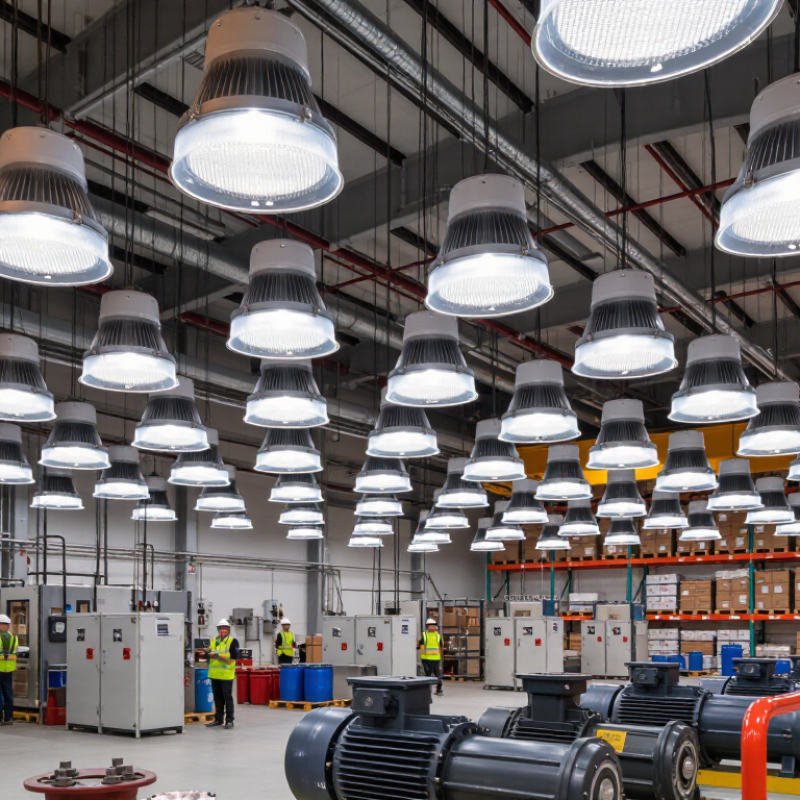
These lights are commonly used in oil and gas facilities, chemical plants, grain-processing areas, paint rooms, mines, and wastewater sites. In a storage room, for example, the fixture may face dust, vibration, moisture, and frequent switching. An IP rating helps resist water and dust, while an impact rating supports safer operation near machinery. However, ratings alone do not prove suitability.

Selection should follow the site’s hazardous-area classification, temperature requirements, voltage, mounting method, and maintenance plan. A qualified engineer should verify these conditions before installation. One practical mistake is choosing by wattage only. That approach ignores glare, beam angle, emergency operation, and driver lifespan.

Field checks should include cable sealing, corrosion, lens damage, and unusual heat. Even a strong fixture can fail when installed carelessly. The best design is not always the brightest one; it is the one that remains stable under real working conditions.

How China’s Leading Manufacturers Are Selected and Ranked

China Top 10 LED Explosion Proof Lighting Manufacturers

How China’s Leading Manufacturers Are Selected and Ranked

Selecting the top ten requires more than comparing factory size or product catalogs. The ranking begins with verified manufacturing experience, engineering capability, and documented quality systems. Inspectors review production lines, material records, aging tests, and sample consistency. Evidence matters.

Technical performance carries significant weight. Products are examined for ingress protection, impact resistance, thermal management, optical efficiency, and stable operation in demanding industrial environments. Test reports should come from recognized laboratories and match the actual model supplied. A bright fixture is not enough.

Field reliability also influences the ranking. Evaluators consider installation feedback, failure rates, replacement procedures, warranty handling, and technical support across different regions. Clear drawings, wiring instructions, and photometric data reveal professional practice. Details matter.

Manufacturers with controlled component sourcing receive stronger scores. So do those that explain design limits instead of making absolute claims. Export documentation, traceability, and compliance with applicable safety standards are checked during the review. Some factories perform well in testing but respond slowly after delivery. That weakness must remain visible.

The ranking uses weighted criteria rather than personal preference. Product safety and documented performance receive the highest scores, followed by production consistency, engineering support, delivery reliability, and customer service. Prices are considered, but low cost cannot repair poor quality. The result is useful, yet not permanent. New testing data, field reports, or production changes may alter the order. Any serious evaluation should leave room for correction.

Profiles of China’s Top 10 LED Explosion-Proof Lighting Manufacturers

Profiles of China’s Top 10 LED Explosion-Proof Lighting Manufacturers

China’s LED explosion-proof lighting sector serves petrochemical plants, mines, ports, and hazardous workshops. Grand View Research estimates the global LED lighting market exceeded USD 78 billion in 2023. That growth increases demand for safer, lower-maintenance industrial fixtures. Evidence matters.

The ten leading Chinese manufacturers differ in practical strengths. Some focus on Zone 1 and Zone 2 luminaires, while others specialize in mining lamps or high-bay systems. Strong profiles usually show IEC 60079 testing, clear protection ratings, thermal-management data, and documented ingress protection.

Their product ranges often include aluminum housings, tempered glass, emergency options, and corrosion-resistant coatings. The MarketsandMarkets industrial lighting analysis identifies energy efficiency, connected controls, and harsh-environment durability as major purchasing drivers. These trends appear clearly in China’s export-oriented factories.

A reliable evaluation also checks factory inspection records, photometric files, warranty terms, and replacement-part availability. Certifications alone are not enough. Installation experience reveals problems that brochures hide, such as glare, cable-gland failures, or excessive surface temperature. China’s GB/T 3836 series aligns closely with the IEC 60079 framework, yet buyers should still confirm certificates for the exact model and configuration. The ten profiles should therefore be read as a procurement shortlist, not an unquestionable ranking. Market reports provide useful direction, but field testing remains necessary. That part is often underestimated.

Key Technologies, Certifications, and Product Differences

China Top 10 LED Explosion Proof Lighting Manufacturers

A credible comparison must examine certification depth, not only lumen output or price. The 2024 MarketsandMarkets report forecasts continued growth in the global explosion-proof lighting market, driven by oil, gas, chemical, and mining projects. This growth raises a practical question: can every “certified” fixture survive the site?

IECEx certification supports international acceptance, while ATEX applies to equipment sold for regulated European zones. UL 844 and local electrical codes may govern North American projects. These approvals address enclosure design, ignition risk, temperature class, and manufacturing controls. They are not interchangeable. A fixture marked Ex db IIC T6 may differ significantly from one marked Ex nR or Ex tb. The zone, gas group, dust layer, and ambient temperature must match.

Technology differences appear during inspection. Efficient LED boards reduce energy use, but thermal paths matter more than advertised wattage. The U.S. Department of Energy’s 2023 SSL R&D Plan cites laboratory LED efficacy above 200 lumens per watt; complete hazardous-area fittings normally deliver less after optics, drivers, and protective glass. Look for sealed cable glands, corrosion-resistant housings, impact ratings, and stable output at high temperatures. Emergency versions also need tested battery performance, not merely a printed backup time.

Field experience exposes weak details. Condensation inside a lens is a warning sign. So is a hot terminal chamber. A neat specification is not always a safe one. Manufacturers should provide traceable certificates, photometric files, thermal data, and routine inspection guidance. Some comparisons still overlook maintenance access, which can make a technically excellent fitting impractical.

China Top 10 LED Explosion Proof Lighting Manufacturers - Key Technologies, Certifications, and Product Differences

Anonymized comparison of representative China-based product profiles. Specifications are typical market ranges and should be verified against the exact product certificate, datasheet, and hazardous-area classification.

Profile Typical Product Focus Common Hazardous-Area Application Explosion-Protection Technology Typical Power Range Typical Luminous Efficacy Typical CCT Options Ingress & Impact Protection Typical Operating Temperature Common Certifications or Standards Key Product Difference
Profile 01 Heavy-duty LED high-bay and low-bay luminaires Oil refineries, petrochemical plants, chemical processing areas Flameproof enclosure with sealed cable entries and protected LED compartment 80–240 W 120–160 lm/W 4,000 K; 5,000 K; 6,500 K IP66/IP67; IK08–IK10 Approximately −40°C to +55°C GB 3836 series IEC 60079 series CCC where applicable Large heat sink, high thermal capacity, and optical distributions for high mounting heights.
Profile 02 Compact LED explosion-proof fixtures Workshops, utility rooms, paint facilities, and service corridors Flameproof construction with integrated driver and gasketed housing 20–80 W 110–150 lm/W 3,000 K; 4,000 K; 5,000 K IP65/IP66; IK08 Approximately −30°C to +50°C GB 3836 series IEC 60079 series CE for applicable markets Smaller housing and lower installation weight for confined spaces and retrofit projects.
Profile 03 Linear LED explosion-proof luminaires Warehouses, tunnels, loading bays, and process platforms Encapsulated or flameproof linear enclosure with continuous gasket sealing 30–150 W 115–155 lm/W 4,000 K; 5,000 K; 6,500 K IP66/IP67; IK08–IK10 Approximately −40°C to +50°C GB 3836 series IEC 60079 series ATEX/IECEx options Uniform linear illumination, continuous mounting options, and reduced shadowing between fixtures.
Profile 04 LED floodlights and area lights Tank farms, open process areas, yards, and loading stations Flameproof housing with adjustable mounting bracket and sealed optical chamber 60–300 W 125–165 lm/W 3,000 K; 4,000 K; 5,000 K; 6,500 K IP66/IP67; IK08–IK10 Approximately −40°C to +55°C GB 3836 series IEC 60079 series CE/ATEX options Multiple beam angles and aiming adjustment for long-distance or broad-area illumination.
Profile 05 Emergency LED explosion-proof lighting Emergency routes, exits, stairways, and hazardous production buildings Explosion-proof enclosure with maintained or non-maintained emergency circuit 6–60 W 90–135 lm/W 4,000 K; 5,000 K; 6,500 K IP65/IP66; IK08 Approximately −25°C to +50°C GB 3836 series IEC 60079 series Emergency-lighting requirements Battery-backed operation, status indicators, and defined emergency duration options.
Profile 06 Integrated battery and solar-capable hazardous-area lights Remote oil and gas sites, perimeter roads, and off-grid installations Certified enclosure combined with isolated battery, charge-control, and photovoltaic interface 20–100 W 100–145 lm/W 3,000 K; 4,000 K; 5,000 K IP66/IP67; IK08 Approximately −30°C to +50°C GB 3836 series IEC 60079 series Battery safety requirements Lower dependence on grid power, with autonomy determined by battery capacity and solar conditions.
Profile 07 Corrosion-resistant stainless-steel or coated-aluminum fixtures Marine terminals, offshore platforms, fertilizer plants, and coastal facilities Flameproof or increased-safety housing with corrosion-resistant fasteners and coatings 40–200 W 115–155 lm/W 4,000 K; 5,000 K; 6,500 K IP66/IP67; IK08–IK10 Approximately −40°C to +55°C GB 3836 series IEC 60079 series Salt-spray testing where specified Improved resistance to salt mist, chemical vapors, humidity, and frequent washdown.
Profile 08 High-temperature LED explosion-proof lighting Boiler rooms, foundries, glass plants, and hot process areas Remote-driver or thermally isolated design with enlarged heat-dissipation path 60–240 W 105–145 lm/W 4,000 K; 5,000 K; 6,500 K IP66; IK08–IK10 Approximately −40°C to +60°C GB 3836 series IEC 60079 series Temperature-class verification Designed for higher ambient temperatures while maintaining the required temperature class.
Profile 09 Smart-control-ready hazardous-area luminaires Industrial plants requiring centralized monitoring or energy management Certified luminaire with isolated control interface; wireless use depends on area approval 40–200 W 120–160 lm/W 3,000 K; 4,000 K; 5,000 K IP66; IK08–IK10 Approximately −30°C to +55°C GB 3836 series IEC 60079 series DALI/0–10 V where specified Dimming, fault monitoring, occupancy control, or network integration subject to project requirements.
Profile 10 Modular LED fixtures for retrofit and replacement projects Existing hazardous-area plants replacing HID, fluorescent, or compact lamps Certified modular housing with interchangeable optics, brackets, and cable-entry configurations 30–180 W 110–155 lm/W 3,000 K; 4,000 K; 5,000 K; 6,500 K IP65/IP66; IK08–IK10 Approximately −30°C to +55°C GB 3836 series IEC 60079 series ATEX/IECEx options Flexible mounting, reduced rewiring, selectable optics, and easier replacement of legacy fixtures.

Technical note: Hazardous-area suitability must be confirmed using the required zone or division, gas or dust group, equipment protection level, temperature class, ambient temperature, ingress rating, and certificate scope. IECEx, ATEX, CCC, and national certification requirements are not interchangeable; the final selection should match the installation jurisdiction and project specification.

How to Compare Suppliers for Industrial Lighting Projects

China Top 10 LED Explosion Proof Lighting Manufacturers

How to Compare Suppliers for Industrial Lighting Projects

Supplier comparison should begin with evidence, not catalogue brightness. The International Energy Agency reports that lighting consumes about 15% of global electricity. Efficient LED systems can reduce site energy demand, but only when measured output matches the application. Request LM-79-style photometric reports, lumen maintenance data, power-factor results, and thermal test records. Check delivered lumens at operating temperature, not only laboratory ratings.

Certification is equally important. For hazardous areas, verify current IECEx or ATEX documentation, protection levels, gas and dust classifications, and certificate scope. Ask whether the exact model is covered. Small suffix changes can matter. Confirm IP ratings under IEC 60529, impact resistance, ambient temperature limits, and cable-entry compatibility. A strong supplier explains these details clearly and provides traceable serial numbers.

Project experience often reveals more than polished brochures. Compare five-year total cost, including installation, relamping, inspection, spare parts, and warranty response. The U.S. Department of Energy notes that LED products can use at least 75% less energy and last much longer than incandescent sources, yet poor thermal design can shorten real service life. Request references from similar refineries, warehouses, or chemical facilities. Visit one operating site if possible. I would also score lead time and engineering support. Lowest price is rarely the lowest risk.

has been added to your cart.
Checkout