Top 10 Outdoor DIP LED Display Manufacturers Worldwide
Outdoor LED displays are becoming more visible in stadiums, transport hubs, retail districts, and roadside advertising. Their appeal is practical: bright images remain readable in daylight, while modular cabinets simplify installation and servicing. DIP technology uses individual red, green, and blue LEDs, often valued for outdoor brightness and straightforward maintenance. Yet performance depends on more than the pixel package.
Market figures offer useful context, but they require careful reading. MarketsandMarkets’ LED display market report projects growth from approximately US$9.6 billion in 2023 to US$17.7 billion by 2028. This figure covers a broader LED display market, not outdoor DIP products alone. Definitions, product categories, and forecasting methods can differ between research firms. Treat the estimate as a direction, not a precise count of DIP installations.
This guide examines ten outdoor DIP LED display manufacturers worldwide. It considers product range, pixel pitch, brightness, cabinet design, environmental protection, and support capabilities. Buyers should also ask for measured specifications and references from comparable installations. A datasheet cannot show every real-world weakness. Even strong manufacturers may vary by project, region, and service network. No ranking can capture all of that. The shortlist is a starting point for informed comparison, not a substitute for technical review.
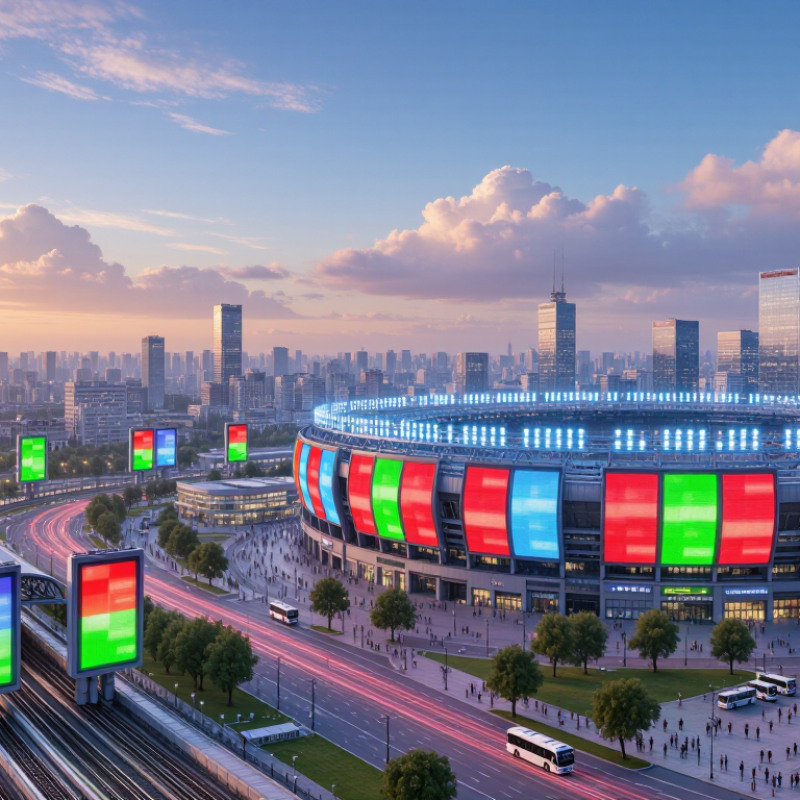
What Outdoor DIP LED Displays Are and How They Work
Outdoor DIP LED displays use individual red, green, and blue LEDs mounted through holes in a circuit board. Together, these tiny light sources form each pixel. Adjusting their brightness creates colors and moving images visible from a distance. The LEDs face outward, making the display well suited to stadiums, roadside signs, and other bright, open spaces. In direct sunlight, high brightness matters. So does readable contrast.
A controller sends image data to driver circuits, which regulate LED current and refresh pixels in sequence. Modules join to form larger screens, while sealed cabinets help limit exposure to rain and dust. Details matter. For example, installers should check cable connections, ventilation, and drainage rather than relying on a weather rating alone. A display running for hours under summer sun can build up heat, affecting performance over time. DIP designs are often valued for brightness and durability, though their viewing angles may be narrower than those of some other LED types. From installation work, one lesson is clear: specifications do not capture every site condition. A screen near a road may face glare, vibration, and uneven maintenance. Real sites are rarely perfect.
Outdoor DIP LED Displays: Typical Brightness by Pixel Pitch
Direct In-line Package (DIP) displays use separate red, green, and blue LED lamps to form pixels. Their robust, high-brightness design makes them suitable for outdoor viewing. The chart shows indicative brightness ranges commonly specified for outdoor DIP displays; actual specifications vary by product and operating conditions.
Key Features That Define Outdoor DIP LED Display Performance
Outdoor DIP LED display performance depends on more than peak brightness. In direct sunlight, high brightness improves readability, but poor contrast can still make images look washed out. Check brightness and contrast together, preferably with measurements taken under realistic viewing conditions. DIP pixels are spaced farther apart than many indoor pixels, so viewing distance and pixel pitch must suit the installation. From across a road, details may matter less than clear text and strong color separation.
Weather resistance is equally important. A robust cabinet, sealed cable entries, and suitable drainage help limit damage from rain and dust. Ask for the stated ingress protection rating and learn how it was tested. Heat also affects reliability: ventilation and temperature monitoring can reduce stress on components during hot afternoons. Color consistency deserves attention, too. A display that looks uniform in a factory may show slight differences across a large outdoor wall. That detail is easy to overlook.
Tips: Request a sample cabinet and inspect it in daylight, not only indoors. Confirm refresh rate, service access, and spare-parts availability before purchase. Keep one thing in mind: specifications are not a substitute for field testing. A small trial installation can reveal glare, uneven color, or maintenance issues that a datasheet misses.
How to Evaluate Worldwide Outdoor DIP LED Manufacturers
Evaluating worldwide outdoor DIP LED manufacturers requires more than comparing quoted prices. Check whether each supplier can provide clear pixel-pitch data, brightness measurements, viewing-angle specifications, and cabinet protection ratings. Ask how those figures were tested. A bright sample in a showroom may look different under midday sun or after rain. Request installation references from climates similar to yours, and confirm the age and operating conditions of those displays.
Tips: Ask for a sample module and inspect it outdoors. Compare color uniformity, soldering, connector fit, and heat after several hours of operation. Request written warranty terms, spare-parts availability, and a realistic delivery schedule. Short answers are not always bad, but vague answers deserve follow-up.
A capable manufacturer should explain its production controls and provide traceable test records, not just polished product photos. Discuss maintenance access, replacement-module compatibility, and who handles technical support across time zones. These details affect downtime. If possible, speak with a recent customer and ask about problems, not only performance. One limitation is that factory audits and certificates cannot guarantee every shipment will match a sample. Keep acceptance criteria in writing, and inspect delivered modules before installation.
Top 10 Outdoor DIP LED Display Manufacturers Worldwide
Choosing among the top 10 outdoor DIP LED display manufacturers worldwide takes more than comparing price lists. Outdoor DIP displays use separate red, green, and blue LED packages, a design often selected for brightness and visibility in demanding conditions. Buyers should examine measured brightness, pixel pitch, refresh rate, and viewing distance. Ask for test reports, not just brochure claims. Rain matters. So does heat. A well-sealed cabinet can still struggle if drainage, ventilation, or cable entry points are poorly designed.
A practical shortlist should include manufacturers with documented production processes, stable component sourcing, and responsive technical support. Request photographs of cabinet seams, power connections, and module backs. These details reveal more than polished front-view images. Ask how the display performs after prolonged exposure to sunlight, moisture, and temperature changes. Also confirm spare-part availability and warranty terms before comparing bids. The lowest quote may exclude installation guidance or replacement modules. That is easy to miss. Independent verification can be difficult, and published rankings rarely explain every selection method. Treat any “top 10” list as a starting point, then compare specifications against the actual site: viewing distance, ambient light, mounting structure, and local service access. A small oversight can become an expensive repair.
Comparing Manufacturers by Technology, Applications, and Global Reach
Outdoor DIP LED manufacturers differ most in pixel design, weather protection, production control, and service coverage. Compare the stated pixel pitch and viewing distance with the installation plan: a roadside sign needs different detail from a stadium screen viewed across a field. Ask for brightness measurements, power use, and test conditions, not just peak figures. Numbers need context.
Application fit matters. For coastal sites, review corrosion-resistant cabinets, sealed connectors, and drainage paths. For sports venues, check refresh behavior on camera and whether replacement modules can be swapped quickly. A well-designed display should also allow practical access to power supplies and signal connections. Small details save time.
Global reach is more than shipping to many countries. It includes local technical support, spare-part availability, clear installation documents, and realistic repair timelines. Compare warranty terms and ask how failures are handled after commissioning. Manufacturer claims vary, and published specifications may not reflect long-term performance in heat, dust, or heavy rain. That gap deserves attention. A careful shortlist weighs independent test records, relevant project experience, and support capacity alongside price. No single factory is best for every site; some comparisons remain uncertain when test methods are not shared.