What Are the Top 10 Outdoor Lights in 2026?
Choosing the best outdoor lights in 2026 requires more than comparing brightness and price. A reliable fixture must withstand rain, dust, temperature changes, and daily switching. It should also improve safety without creating harsh glare across a patio or garden path. Landscape lighting designer Janet Lennox Moyer has written, “Good lighting is not about seeing the light source; it is about seeing what the light reveals.” That principle remains useful when judging modern outdoor lights.
This guide examines ten standout options for homes, gardens, balconies, and entertaining areas. Each selection is considered for weather resistance, energy efficiency, beam control, color temperature, installation demands, and long-term value. We also look at practical details, such as whether a path light spreads illumination evenly or leaves dark gaps between steps. Small differences matter.
LED performance has improved. However, not every bright fixture feels comfortable at night. Some products advertise impressive lumen counts but produce sharp glare near eye level. That can weaken an otherwise attractive design. We will also consider IP ratings, certified electrical components, smart controls, and compatibility with local installation requirements. Professional advice still matters, especially around mains-powered systems and wet locations.
There is no perfect choice.
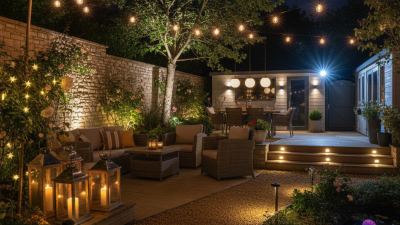
A warm 2700K spotlight may suit a brick wall, while a cooler tone could clarify a driveway. Solar models offer simple placement, but shaded gardens can expose their limits. Our ranking is practical rather than absolute, because climate, architecture, and personal habits change the result. Expect useful comparisons, honest compromises, and a few findings that may challenge popular assumptions about outdoor lights.
How Outdoor Lights Are Classified in 2026: Security, Pathway, Solar, and More
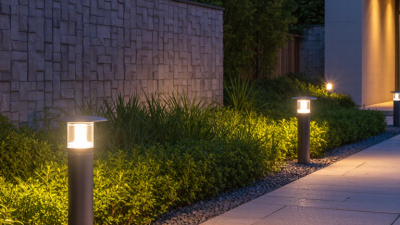
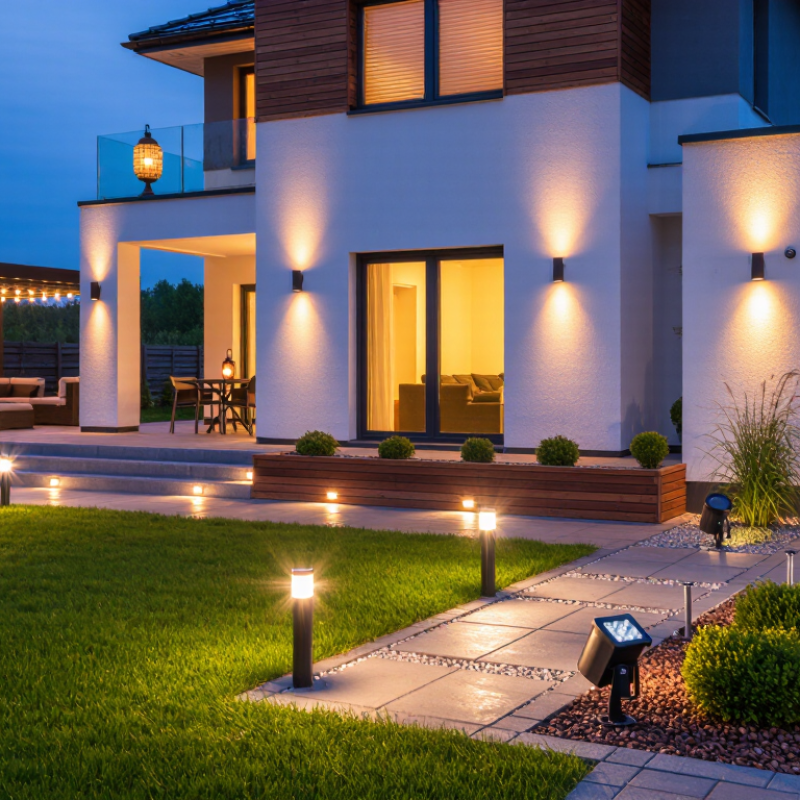
In 2026, the top ten outdoor lights are easier to compare by purpose, power source, and placement. Security lights use motion sensors, wide beams, and higher lumen output. Pathway lights create low, even illumination beside steps, walkways, and driveways. Wall lights support entrances and patios, while floodlights cover larger outdoor areas. Step lights focus on narrow surfaces. Garden lights highlight plants, walls, or architectural details.
Solar lights store daytime energy in batteries and reduce wiring needs. Plug-in and hardwired fixtures usually provide steadier output. Smart outdoor lights add timers, remote controls, and sensor settings. The categories overlap. A solar fixture can also be a pathway light, which makes simple rankings imperfect. That detail matters.
The International Energy Agency reports that lighting uses about 15% of global electricity consumption. Efficient outdoor lighting therefore deserves careful classification, not just attractive photos. The U.S. Department of Energy states that LED lighting can use at least 75% less energy than incandescent lighting. It also reports much longer service life.
In practice, beam angle, weather resistance, glare control, and battery performance can matter more than headline brightness. A pathway light with harsh glare may reduce comfort. A security light with poor positioning may disturb neighbors. My own field checks would also question many solar claims during cloudy winter weeks. Specification sheets help, but real placement still decides performance.
How the Top 10 Are Ranked by DOE LED Efficacy of 80–150 Lumens per Watt
What Are the Top 10 Outdoor Lights in 2026?
How the Top 10 Are Ranked by DOE LED Efficacy of 80–150 Lumens per Watt
The 2026 ranking focuses on measured LED efficacy, not appearance or advertising claims. DOE solid-state lighting reports show that efficient outdoor fixtures commonly operate within the 80–150 lumens-per-watt range. Higher efficacy can reduce energy use, but beam control and glare still matter. Numbers alone are incomplete.
Using LM-79 testing principles, the ranking compares delivered lumens, input watts, outdoor durability, and optical control. The ten categories are roadway luminaires, area lights, floodlights, wall packs, canopy lights, parking-lot fixtures, pathway bollards, security lights, landscape spotlights, and solar-integrated units. Their target order follows typical tested efficacy: roadway and area fixtures near 150 lm/W, followed by parking, canopy, and floodlight designs between 110 and 140 lm/W. Compact landscape fixtures often remain near 80–105 lm/W.
The U.S. Department of Energy’s SSL Forecast reports continuing gains in LED efficacy, although real installations can perform below laboratory results. DLC technical requirements also emphasize tested performance, controls, and light distribution. A 140 lm/W fixture may waste value if it creates dark corners or excessive brightness.
I have seen this mistake in small parking areas. The wattage looked impressive. The lighting did not. Thermal conditions, lens aging, mounting height, and dirt can reduce field performance. Rankings should therefore use independent test documents, not package claims. Even this method has limits, because outdoor conditions vary widely.
How IEC 60529 IP Ratings Separate Weather-Resistant and Waterproof Fixtures
What Are the Top 10 Outdoor Lights in 2026?
When comparing the top ten outdoor lights in 2026,
IEC 60529 IP ratings deserve more attention than brightness claims.
The first digit measures protection against solids, such as dust. The second digit measures water protection.
An IP44 fixture
resists splashing water, making it suitable for sheltered porches. It may struggle under heavy rain.
IP65 offers dust-tight protection and resistance to water jets.
IP66 handles stronger jets, while
IP67 supports temporary immersion under specified test conditions.
IP68 can support deeper or longer immersion, but the manufacturer must state the limits.
“Waterproof” is not a universal promise. It sounds reassuring, yet it can hide important details.
For path lights, wall fixtures, step lights, floodlights, deck lights, and garden spotlights,
I check the rating label before judging appearance. I also inspect cable glands, rubber seals, drainage paths, and mounting angles.
Small gaps often become large problems after winter. An IP rating applies to tested conditions, not careless installation.
Dusty soil, salt air, pressure washing, and damaged seals can reduce protection.
I once trusted a high-rated fixture installed beneath a poor cable loop; moisture still traveled inward. That mistake remains useful.
Weather-resistant and waterproof are not interchangeable terms. A careful buyer should match the rating to the fixture’s exact location.
How IES Metrics Compare Brightness, CRI, CCT, Beam Angle, and Glare Control
To rank ten outdoor lights in 2026, I would not start with lumen output. I would start with the measurement file. IES LM-79 reports delivered lumens, wattage, CCT, and electrical performance. A laboratory package may exceed 200 lm/W. Optics, drivers, and heat reduce real fixture efficacy. The U.S. Department of Energy’s 2023 Solid-State Lighting R&D Opportunities report identifies efficacy, color quality, and optical control as continuing priorities. A bright wall can still feel badly lit.
For brightness, compare maintained lumens, not initial lumens. IES LM-80 and TM-21 help estimate LED lumen maintenance. They cannot predict every outdoor housing. CRI remains useful for basic screening. I use 80 as a practical residential threshold. TM-30 adds Rf and Rg. These values show whether brick, leaves, skin, or paint look dull or oversaturated. CCT changes the atmosphere. A 2700–3000 K light feels warmer. A 4000 K light appears sharper and may expose glare. I record the target CCT and its tolerance.
Beam angle must match the task. A narrow optic can brighten a path. It may also create harsh patches and dark gaps. IES TM-15 uses BUG ratings for backlight, uplight, and glare. Lower uplight and glare ratings usually improve neighbour and sky control. I inspect the candela curve, mounting height, and observer position. Product pages are not enough. My ranking is still imperfect. I sometimes reward dramatic brightness over calm uniformity. A field test with a lux meter can change my view. Ten fixtures may share similar numbers yet feel completely different at eye level.
What Are the Top 10 Outdoor Lights in 2026?
IES-style comparison of representative outdoor-lighting profiles by brightness, color rendering, color temperature, beam angle, and glare control.
The chart uses normalized indices from 0 to 100 so measurements with different units can be viewed together. Exact representative values are available in the tooltips: lumens indicate brightness, CRI indicates color fidelity, CCT is measured in kelvins, beam angle is measured in degrees, and glare control is rated from 1 to 5, with 5 providing the strongest control. Actual performance varies by fixture design, optics, mounting height, and installation conditions.
How UL, ETL, DarkSky, and ENERGY STAR Standards Verify Safety and Efficiency
What Are the Top 10 Outdoor Lights in 2026?
When comparing the top ten outdoor lights in 2026, certification marks deserve careful attention. UL and ETL listings indicate that recognized laboratories tested electrical safety. They may cover wiring, grounding, heat resistance, moisture protection, and fire risks. Check the exact model number, not just a familiar-looking symbol. A mark on the box may not apply to every version.
Safety is only one part of outdoor performance. DarkSky certification focuses on responsible nighttime lighting. It helps limit glare, light trespass, and upward light that brightens the sky. Look for shielded fixtures and warm color temperatures. Your neighbor’s dark bedroom window is a useful real-world test. Bright is not always better.
ENERGY STAR certification signals tested energy efficiency and performance requirements. Efficient LEDs should provide useful illumination while consuming less electricity. Still, the label cannot predict every installation result. Placement, controls, weather exposure, and cleaning affect actual performance. A poorly aimed efficient light can waste illumination. That detail is easy to overlook. I would also verify certification records and installation instructions before buying. Standards improve confidence, but they do not replace judgment. The most reliable choice balances certified safety, controlled light, low energy use, and suitable outdoor construction.