Top 10 Fannicoo LED Corn Bulb Types for Global Buyers?
Choosing the right LED corn bulb can feel simple until wattage, base size, voltage, and heat management enter the discussion. For global buyers, these details affect safety, brightness, installation, and long-term value. This guide introduces the Top 10 Fannicoo Led Corn Bulb Types for different commercial and residential needs. It covers models for warehouses, workshops, parking areas, street fixtures, retail spaces, and indoor retrofits.
Each type is considered through practical buying factors. These include lumen output, color temperature, beam distribution, socket compatibility, IP protection, and expected service life. A buyer replacing a 150-watt metal halide lamp may need a different solution than someone upgrading a small porch fixture. Fannicoo Led Corn Bulb options can vary greatly in body design, cooling structure, and operating voltage. Those differences deserve careful attention.
Real installation experience often reveals what product pages miss. A compact bulb may fit neatly, yet produce unwanted heat inside a closed fixture. A high-lumen model may look attractive, yet exceed the socket’s rating. Small details matter. We will also consider packaging, regional electrical requirements, warranty clarity, and supplier communication. These points support more reliable purchasing decisions across international markets. However, no single bulb suits every application. Some comparisons may remain subjective, and specifications should be verified against current product data before ordering. That caution is not weakness; it is responsible buying.
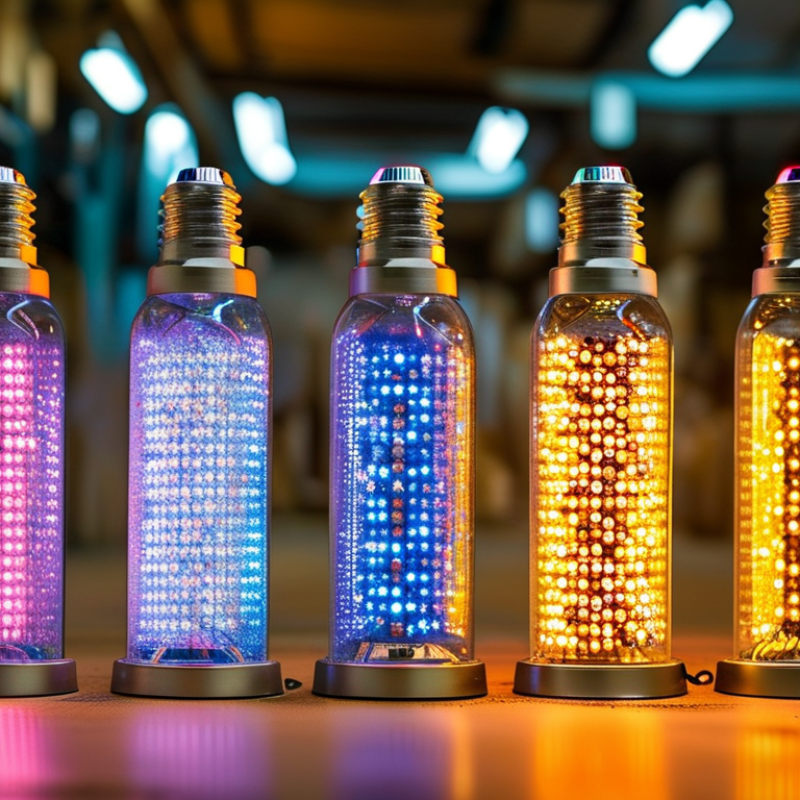
Define the Top 10 Fannicoo LED Corn Bulb Types by Base and Wattage
Top 10 LED Corn Bulb Types for Global Buyers
LED corn bulbs are commonly defined by two practical factors: base size and wattage. The base must match the socket, while wattage indicates power demand and expected brightness.
E26 12W E27 18W B22 15W E26 25W E27 30W
These smaller types suit household fixtures, workshops, corridors, and low-height commercial spaces. Check the socket carefully.
For larger installations, consider E39 40W, E40 50W, E39 60W, E40 80W, and EX39 100W versions. E39 and E40 bases are widely used in high-bay fixtures, warehouses, parking areas, and street-style lamps.
EX39 bases may require a matching mogul socket. They are not automatically interchangeable. A small mistake here can stop installation completely.
In field purchasing, wattage alone is a weak comparison. A 40W bulb with poor thermal control may perform worse than a reliable 30W model. Look for lumen output, beam angle, color temperature, voltage range, and enclosed-fixture approval.
lumen output beam angle color temperature voltage range enclosed-fixture approval
A 3000K bulb creates warmer light, while 5000K appears clearer in work areas. I have seen buyers choose the highest wattage and regret the heat. That decision needs more thought.
Always verify local socket standards and operating conditions before ordering large quantities.
Compare Lumens, 100–200 lm/W Efficacy, Lifespan, and Energy Savings
For global buyers, the ten most useful LED corn bulb types include E26, E27, E39, E40, 360-degree, enclosed-fixture, outdoor-rated, dimmable, high-bay, and retrofit models. Their output commonly ranges from 8,000 to 30,000 lumens. E26 and E27 versions suit smaller fixtures, while E39 and E40 models support warehouses and street applications. Check the base carefully. A brighter lamp is not automatically better.
Efficiency is the key comparison. Many current models deliver 100–200 lm/W under laboratory conditions, although heat, optics, and fixture design can reduce field performance. The U.S. Department of Energy’s Solid-State Lighting research reports continuing improvements in LED efficacy, with leading products approaching the upper end of this range. A 100-watt LED replacing a 300-watt conventional lamp can save about 2,000 kWh over 10,000 operating hours. At $0.15 per kWh, that equals roughly $300 in electricity savings. The figure changes by region.
Expected lifespans usually reach 25,000–50,000 hours, based on manufacturer testing and industry standards. ENERGY STAR data indicates certified LED products can use at least 75% less energy and last up to 25 times longer than incandescent lighting. Still, enclosed fixtures may shorten service life. Real installations are messier. Buyers should compare maintained lumens, warranty terms, power factor, color temperature, and operating temperature—not only the impressive starting lumen value.
Top 10 LED Corn Bulb Types for Global Buyers — Compare Lumens, 100–200 lm/W Efficacy, Lifespan, and Energy Savings
| No. | LED Corn Bulb Type | Rated Power | Typical Lumens | Efficacy | Incandescent Equivalent | Rated Life | Energy Saving* | Annual Energy Saved* | Recommended Application |
| 1 | Mini A19 / E26 Corn Bulb | 6 W | 600 lm | 100 lm/W | 60 W | 25,000 h | 90.0% | 54 kWh | Bedrooms, corridors, decorative fixtures |
| 2 | Standard A19 / E27 Corn Bulb | 8 W | 900 lm | 113 lm/W | 75 W | 25,000 h | 89.3% | 67 kWh | Homes, hotels, retail interiors |
| 3 | High-Lumen A21 / E27 Corn Bulb | 10 W | 1,200 lm | 120 lm/W | 100 W | 30,000 h | 90.0% | 90 kWh | Commercial rooms, restaurants, public areas |
| 4 | 12 W Omni-Directional Corn Bulb | 12 W | 1,500 lm | 125 lm/W | 125 W | 30,000 h | 90.4% | 113 kWh | Open fixtures, warehouses, retail aisles |
| 5 | 15 W Medium-Output Corn Bulb | 15 W | 2,000 lm | 133 lm/W | 150 W | 30,000 h | 90.0% | 135 kWh | Garages, workshops, small industrial spaces |
| 6 | 18 W High-Output Corn Bulb | 18 W | 2,500 lm | 139 lm/W | 200 W | 35,000 h | 91.0% | 182 kWh | Parking areas, workshops, high ceilings |
| 7 | 20 W Dusk-to-Dawn Compatible Corn Bulb | 20 W | 3,000 lm | 150 lm/W | 250 W | 35,000 h | 92.0% | 230 kWh | Outdoor wall packs, pathways, security lighting |
| 8 | 24 W Post-Top / Globe Corn Bulb | 24 W | 3,600 lm | 150 lm/W | 300 W | 40,000 h | 92.0% | 276 kWh | Parks, courtyards, pedestrian areas |
| 9 | 30 W Mogul-Base Retrofit Corn Bulb | 30 W | 4,500 lm | 150 lm/W | 400 W | 50,000 h | 92.5% | 370 kWh | High-bay fixtures, loading zones, large warehouses |
| 10 | 40 W Industrial High-Bay Corn Bulb | 40 W | 6,000 lm | 150 lm/W | 500 W | 50,000 h | 92.0% | 460 kWh | Factories, distribution centers, industrial buildings |
Notes: Values are representative industry specifications for LED corn bulb categories and may vary by model, driver, optics, ambient temperature, and certification requirements. Energy-saving estimates assume 1,000 operating hours per year and compare LED input power with the listed incandescent equivalent; actual savings depend on electricity rates and operating conditions.
Verify UL, CE, RoHS, IEC 60598, and IP65 Compliance for Global Markets
LED corn bulbs come in several forms, including omnidirectional, high-output, dimmable, and photocell-compatible models. When selecting products for global markets, compliance should guide the purchase, not only brightness or wattage. Shape alone proves nothing. Ask suppliers for current test reports and declarations covering the exact bulb model, driver, and voltage range.
UL documentation should identify the applicable safety standard, testing laboratory, and certification scope. For European sales, CE marking needs a valid Declaration of Conformity, while RoHS evidence should address restricted substances in the complete product.
IEC 60598 test records can support luminaire safety evaluation, but buyers must confirm whether the report applies to the lamp or the finished fixture. IP65 claims also require careful checking. The enclosure must resist dust and water jets under defined laboratory conditions. It does not automatically permit outdoor installation in every environment.
Inspect the label, socket compatibility, operating temperature, and installation instructions before ordering samples. A practical test includes several hours of operation inside the intended fixture, especially in enclosed housings where heat accumulates. Keep photographs, batch numbers, reports, and supplier responses in one traceable file. Documentation can look convincing yet remain incomplete. I have seen product pages use broad compliance language without matching model numbers. That weakness deserves attention. Requirements also differ by country, voltage system, and installation method, so local regulatory review may still be necessary before shipment.
Match Each Type to 100–277 V Fixtures, Climate, and Application Needs
Top 10 LED Corn Bulb Types for Global Buyers
Choosing the right corn bulb starts with the fixture, not the lumen claim. For 100–277 V systems, consider ten practical types: standard retrofit, ballast-bypass, plug-and-play, enclosed-rated, wet-location, high-temperature, cold-start, high-lumen, dimmable, and emergency-compatible models. Standard bulbs suit dry warehouses and corridors. Ballast-bypass versions fit rewired fluorescent fixtures, while plug-and-play types require verified ballast compatibility.
Enclosed-rated bulbs protect performance inside sealed globes. Wet-location designs suit covered outdoor areas, but not every product tolerates salt air. High-temperature models serve bakeries and industrial ceilings. Cold-start versions perform better in refrigerated rooms. High-lumen types support tall warehouses, although glare can increase. Dimmable bulbs need compatible controls; many low-cost dimmers behave poorly. Emergency-compatible models require a tested battery system and clear maintenance procedures.
Climate changes the specification. In hot regions, check the stated ambient temperature and heat-sink design. In cold regions, confirm starting temperature and driver behavior. The U.S. Department of Energy reports that LED lighting can use at least 75% less energy and last up to 25 times longer than incandescent lighting. However, fixture losses reduce real savings. The DesignLights Consortium’s qualification approach also emphasizes tested efficacy, distribution, color quality, and thermal performance, not marketing language alone. Measure the socket, inspect voltage, and verify certification records. I still distrust impressive lumen figures without photometric files. A 100–277 V label does not guarantee reliable operation in every climate.
Top 10 LED Corn Bulb Types for Global Buyers
Typical lumen output by LED corn bulb type, matched with 100–277 V fixture compatibility, climate suitability, and common applications. Values represent practical industry ranges for commercial lighting selection.
Lower-wattage E26/E27 models suit compact fixtures and cooler indoor environments, while higher-output E39/E40 models are better for warehouses, streets, parking areas, and high-bay applications. Confirm socket type, heat dissipation, ambient temperature, and fixture voltage before installation.