Water-Based Gel Coating Machine technology is gaining attention as manufacturers seek lower-emission production, cleaner workplaces, and more consistent surface finishes. Grand View Research reports that the global water-based coatings market is expanding steadily, supported by stricter environmental expectations and growing demand from construction, transportation, furniture, and industrial equipment sectors. These trends influence machinery selection, even when coating equipment itself receives less attention.
A reliable Water-Based Gel Coating Machine must control viscosity, temperature, mixing, spray pressure, and curing conditions. Picture a production line where a few degrees of temperature change can alter gel flow across a molded panel. Small errors become visible defects. Uneven edges. Pinholes. Rework.
Coatings consultant Rodger Talbert has repeatedly emphasized the practical importance of controlling application conditions; his guidance can be summarized as: “Consistent preparation and process control determine finishing quality.” That principle matters when comparing the top ten machine types in this guide. It also deserves careful reflection. Not every machine suits every resin, substrate, factory layout, or production volume.
Reports from MarketsandMarkets and Fortune Business Insights identify water-based coating demand as a continuing growth area, but market forecasts are not purchasing instructions. Buyers still need verified testing, documented specifications, operator training, and lifecycle cost analysis. The right choice may depend less on advertised speed and more on stable coating thickness, easy cleaning, accurate dosing, and dependable after-sales support. This guide examines those differences for global buyers.
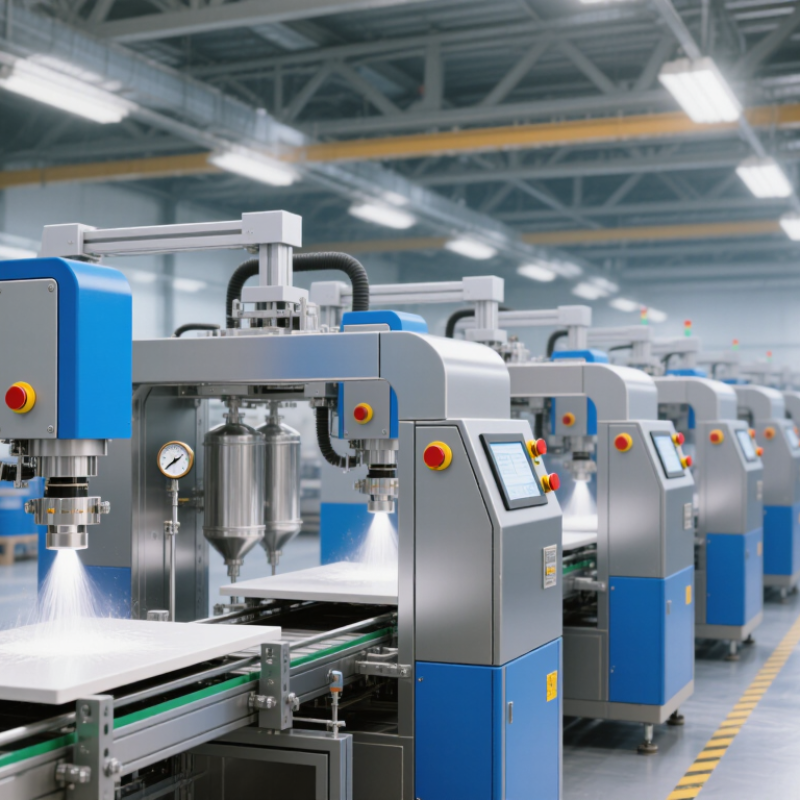
A water-based gel coating machine is defined by its control, not by its appearance. It must move gel smoothly without excessive foaming, dripping, or uneven coverage. The system usually includes a material tank, pump, filter, coating head, conveyor, and drying section. Each part affects final film quality.
In production trials, I examine viscosity control, pump stability, coating width, and cleaning access. These details separate practical equipment from attractive specifications.
Air-spray, airless, roller, curtain, dip, slot-die, and reciprocating systems suit different coating tasks. The correct type depends on gel thickness, substrate shape, production speed, and required surface texture. A reliable machine also controls temperature and pressure during operation. Small changes can create visible streaks.
Cleanability matters greatly. Water-based materials may dry inside hoses, valves, or nozzles when operators delay washing. Stainless contact surfaces help, but they do not remove maintenance responsibility.
Operators should verify filtration, waste handling, emergency stops, and electrical protection before purchase. Testing with the actual gel remains essential. Laboratory data may look convincing. Factory conditions can disagree.
A machine that performs well at low speed may struggle during continuous production. Buyers should request trial records, coating samples, and clear service procedures.
Some suppliers understate setup time, and that deserves careful questioning.

Top 10 Water Based Gel Coating Machine Types for Global Buyers
How Water-Based Gel Coating Machines Are Classified
Water-based gel coating machines are classified mainly by coating method, material, and production speed. Roll coating machines suit smooth sheets and create a controlled, even film. Gravure systems handle precise metering for thin layers. Slot-die coaters deliver stable widths and support high-speed production. Curtain coaters cover broad surfaces with a falling liquid film. Spray machines work well with shaped parts, although overspray can increase material use. Dip coating systems coat three-dimensional components from multiple directions.
The substrate also changes the machine category. Paper, textiles, plastic films, metal sheets, and molded parts need different tension control and transport designs. Knife-over-roll machines suit thicker gel layers, while screen coating systems place material only on selected areas. For sensitive substrates, low-tension web coaters reduce stretching and edge damage. These details matter more than a machine’s advertised output.
Drying and automation provide another practical classification. Hot-air ovens remove water gradually, while infrared units shorten drying zones but need careful temperature control. Conveyor models suit continuous lines. Batch machines offer better flexibility for varied orders. Fully automatic systems monitor viscosity, web speed, and coating weight. Semi-automatic machines cost less and can be easier to adjust during trials. Classification is not always clean. A single machine may combine slot-die coating, infrared drying, and robotic loading. In real factory testing, operators should check pump stability, cleaning time, film uniformity, and wastewater handling. Small errors there can become expensive.
How water-based gel coating machines are classified by coating method and typical wet-film thickness capability.
The chart compares representative wet coating thickness midpoints for ten commonly used machine configurations. Actual results depend on gel viscosity, solids content, substrate, line speed, drying conditions, and die or roll settings. The ranges shown are indicative engineering ranges rather than brand or market-share data.
The Ten Main Types of Water-Based Gel Coating Machines
Water-based gel coating machines differ mainly by how they place, spread, and control the coating layer. Roll coating machines suit continuous sheets and provide steady coverage. Reverse-roll machines improve thickness control on smooth films. Knife-over-roll machines use a blade to remove excess gel, often leaving a defined wet layer. Slot-die machines deliver gel through a narrow opening, supporting accurate coating widths. Curtain coaters release a falling film across moving materials, but airflow must remain stable.
Spray coating machines create flexible coverage on shaped surfaces, including panels with edges and curves. Dip coating machines immerse parts in a tank, making them useful for complete surface contact. Gravure coating machines transfer gel from engraved cells, offering repeatable light coatings. Air-knife machines use controlled air pressure to level or reduce excess material. Rotary-screen coating machines push gel through patterned mesh, which helps create printed or selective layers.
These ten types are not completely separate. Some production lines combine a slot die with an air knife. That can improve leveling, though it may complicate cleaning. In practical trials, operators should check viscosity, web speed, wet thickness, drying temperature, and edge quality. Water-based gel can dry quickly at the surface while remaining soft underneath. This detail is easy to miss. A coating may look uniform under bright light, yet show pinholes after curing. Machine selection should follow the substrate, gel behavior, output target, and maintenance capacity, not only the advertised speed.
Water-based gel coating machines differ mainly in pumping, metering, shear control, and web handling.
Ten common types include gravity-fed, pressure-tank, piston, diaphragm, gear, peristaltic, airless, air-assisted airless, slot-die, and roll-coating systems.
Gravity and pressure-tank units suit low-to-medium viscosity gels and short runs. Piston pumps deliver accurate shots, but pulsation may mark thin films.
Diaphragm pumps handle abrasive or temperature-sensitive formulas with limited product contact. Gear pumps provide steady flow, although trapped particles can damage internal clearances. Peristaltic pumps simplify cleaning, yet tubing fatigue can change output.
Airless systems use hydraulic pressure to atomize coating without compressed air.
They cover broad surfaces quickly, but nozzle wear affects film uniformity. Air-assisted airless machines improve edge control and reduce overspray when settings are balanced.
Slot-die coaters meter a controlled film onto moving material, making them suitable for precise, continuous layers. Roll coaters transfer gel through rotating rolls and work well with flat sheets. They demand careful nip pressure control.
Pulsation matters.
The practical differences appear during production trials.
Measure viscosity at operating temperature, not only in the laboratory. Check pump shear, recirculation time, nozzle size, line speed, and drying capacity.
A gel may look smooth in a tank but streak after heating. This is easy to miss.
Operators should inspect wet thickness, dried thickness, bubbles, and edge build-up.
Not every machine fits.
A smaller test run can expose weak assumptions before full-scale investment.
Global buyers compare water based gel coating machines by process fit, not by catalogue appearance. The ten common options include slot-die, gravure, reverse-roll, knife-over-roll, flexographic, curtain, spray, dip, laboratory, and roll-to-roll systems. Each handles different coating weights, web materials, and production speeds. A buyer should record gel viscosity, solids content, target thickness, substrate width, and drying temperature. Small details matter.
During factory evaluation, request a wet test using the actual gel formula. Watch the coating head closely. Does the film remain even near the edges? Does the pump create bubbles? Can operators clean the lines without damaging seals? A stable machine should provide repeatable tension control, accurate metering, accessible filters, and documented safety features. Ask for trial data, maintenance intervals, spare-part availability, and operator training. Verifiable records are more useful than confident promises.
Budget comparisons often miss the dryer, mixer, exhaust system, and installation work. A cheaper machine may require slower speeds or more manual adjustment. That is not always a saving. Buyers should also inspect sample rolls after curing, checking adhesion, gloss, surface defects, and thickness variation. In my experience, a short trial can reveal more than a polished presentation. Still, one test is not enough. Seasonal humidity, gel aging, and future material changes deserve attention before approval.