What Is a Wall Mount Exam Light from China?

What Is a Wall Mount Exam Light from China? It is a fixed medical examination luminaire designed for close, controlled illumination during clinical assessments. Unlike a mobile examination lamp, it attaches directly to a wall, saving floor space and reducing cable movement around the patient.

The product typically combines a high-CRI LED module, adjustable arm, focused beam, sterile-handle option, and sealed housing. These details matter beside a treatment couch. A clinician needs to see skin tone, tissue texture, and small color changes without harsh shadows. The Illuminating Engineering Society’s healthcare lighting guidance stresses visual accuracy, glare control, and maintainable performance. Meanwhile, Fortune Business Insights and Grand View Research both identify LED adoption, energy efficiency, and healthcare modernization as important medical-lighting market drivers. Their market estimates differ, which deserves caution. Report boundaries are not always consistent.

“Lighting is not just about seeing; it is also about experiencing,” lighting researcher Peter R. Boyce wrote in Human Factors in Lighting. His observation also applies to examination rooms, where comfort can influence communication and clinical attention. However, a bright lamp is not automatically a reliable lamp.

Wall Mount Exam Light China suppliers now offer various color temperatures, illumination levels, sterilizable handles, and mounting configurations. Buyers should verify photometric test results, electrical safety documentation, warranty terms, and quality-control records. A factory photograph proves little. Independent inspection, sample testing, and traceable production records provide stronger evidence. In practical use, the best model is the one that stays stable, cleans easily, and places light exactly where the clinician needs it. Some product descriptions still overpromise. That is worth questioning.
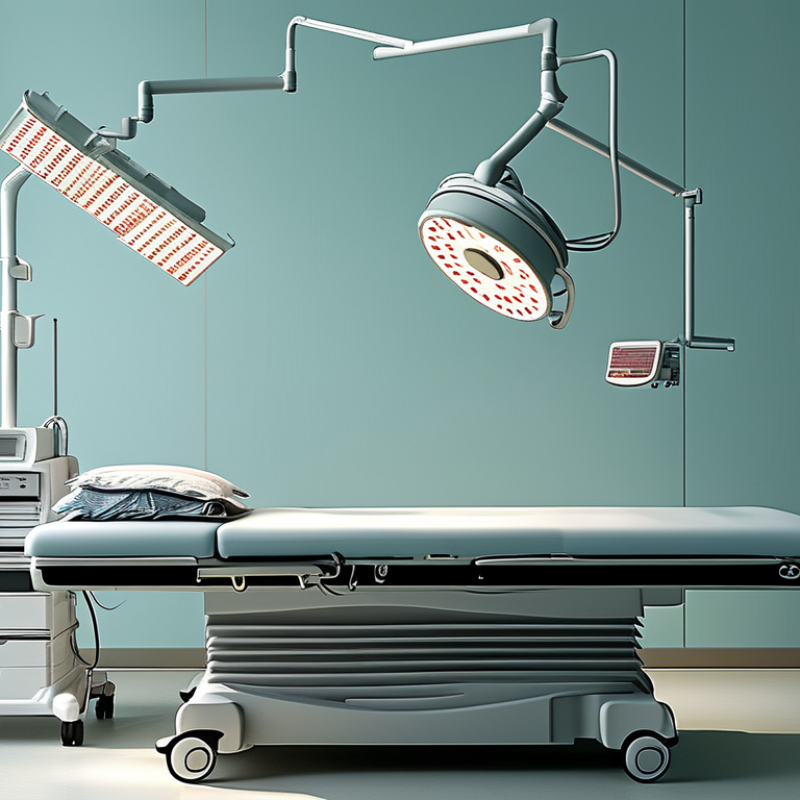
What Is a Wall Mount Exam Light from China?

Definition and Purpose of a Wall Mount Exam Light from China

What Is a Wall Mount Exam Light from China?

Definition and Purpose of a Wall Mount Exam Light from China

A wall mount exam light from China is a medical examination lamp fixed to a wall or support rail. It provides focused illumination for routine checks, minor procedures, and clinical assessments. Unlike general room lighting, it directs light toward a patient’s examination area. The adjustable arm helps clinicians position the beam without blocking access. Good visibility matters.

In practical use, nurses and physicians may examine skin, wounds, ears, or injection sites. Many models use efficient LED modules with adjustable brightness and neutral white light. A stable mounting plate reduces movement during careful examinations. Some designs also include a sterile handle cover or a sealed control panel. These details can improve cleaning and daily workflow.

Products made in China vary in structure, optical quality, and inspection procedures. Buyers should review test reports, electrical data, installation instructions, and material specifications. I would also check the lamp’s heat management after extended operation. A bright lamp is not automatically a suitable lamp. That assumption needs reconsideration. Clinical users should confirm compatibility with local facility requirements and applicable medical equipment rules. Supplier communication remains important, especially when confirming beam diameter, color rendering, warranty terms, and replacement parts. In my experience, unclear technical drawings can create avoidable installation problems.

What Is a Wall Mount Exam Light from China?

Relative Illuminance by Working Distance

A wall mount exam light from China is a fixed medical examination lamp installed on a wall or examination-room support system. Its purpose is to provide focused, shadow-reduced illumination for routine examinations, minor procedures, wound care, and clinical assessments. The chart uses the inverse-square law to show how relative illuminance decreases as the working distance increases, with illumination at 0.5 m normalized to 100%.

Key Components and Lighting Features

A wall mount exam light from China is a clinical lighting unit fixed directly to a wall or reinforced panel. Its value depends on more than brightness. The key components include a mounting plate, articulated arm, LED head, optical lens, handle, control panel, and power supply. A stable mounting plate reduces movement during examinations. The arm should move smoothly but hold its position firmly. In practical use, loose joints become distracting quickly. They can also affect the examination angle.

Modern LED modules usually provide bright, focused illumination with lower heat than older bulbs. Adjustable intensity helps clinicians inspect different areas without harsh glare. A deep, neutral color appearance supports clearer observation of skin tone and tissue details. Some models include shadow reduction through multiple LED arrangements. The lens should distribute light evenly across the examination field. A removable handle can improve positioning and cleaning. However, “easy to clean” is not enough. The surface design, sealing, and compatible disinfectants should be checked carefully. No light is perfect.

Tips: Confirm the wall structure before installation. Ask for photometric data, arm movement limits, color rendering information, and electrical specifications. Request samples or inspection records when possible. Check whether controls remain usable while wearing gloves. Leave space for maintenance around the power connection. In my experience, buyers often focus on lumen output and overlook balance, cable routing, and joint durability. That is a mistake worth reconsidering. A reliable supplier should explain testing methods clearly and provide documents matching the delivered configuration.

Common Medical and Professional Applications

What Is a Wall Mount Exam Light from China?

Common Medical and Professional Applications

A wall mount exam light from China is a medical illumination unit fixed directly to a wall. It usually has an adjustable arm, focused LED output, and a compact head. This design saves floor space in busy rooms. It also keeps cables away from walkways. In my experience, smooth arm movement matters more than impressive appearance. A stiff joint quickly becomes frustrating during repeated examinations.

Clinics commonly use these lights for general examinations, wound care, dermatology checks, and minor procedures. Nurses may position the beam over a patient’s arm, leg, or upper body. Dental rooms can use wall-mounted units for close visual inspection when ceiling space is limited. Veterinary clinics also benefit from flexible lighting around treatment tables. In beauty and professional care rooms, the same style supports skin assessment and detailed work. The application changes, but accurate illumination remains essential.

A suitable unit should offer stable brightness, low heat, easy cleaning, and reliable positioning. High color rendering can help clinicians distinguish subtle skin and tissue tones. However, specifications alone do not guarantee practical performance. Room layout, working distance, and glare can change the result. Buyers sourcing from China should request test reports, electrical details, installation drawings, and service information. They should also check local medical-device and electrical requirements before purchase. I have seen attractive lights fail because their mounting plates did not match the wall. That small detail deserves more attention.

Manufacturing Standards and Quality Considerations

A wall mount exam light from China is a fixed clinical luminaire designed for focused patient examination. Its quality depends less on appearance and more on controlled manufacturing, testing, and traceability.

The ISO Survey 2022 recorded more than 26,000 ISO 13485 certificates worldwide. This shows strong demand for documented medical-device quality systems. However, certification alone proves little about one light. Inspectors should review incoming-material records, LED batch data, calibration logs, and final inspection reports. The manufacturer should apply IEC 60601-1 for electrical safety and IEC 60601-1-2 for electromagnetic compatibility. IEC 60601-2-41 is also relevant to surgical and examination luminaires. The light should provide stable illumination, low heat at the patient area, and smooth arm movement. Check it physically. Loose joints reveal weak assembly control.

Photobiological safety matters too. IEC 62471 helps evaluate risks from optical radiation, especially during close examination. Ask for measured illuminance, color-rendering data, shadow performance, and lifetime testing under repeated movement. A serious supplier can provide test conditions, not only attractive figures. Export documentation should match the actual product configuration. Small differences in voltage, mounting hardware, or control switches can create installation problems. I have seen specifications look complete while missing cable strain testing. That deserves reflection. Quality is sometimes treated as paperwork, although a clinician experiences it through reliable light, clean adjustment, and predictable maintenance. Mistakes still happen. A clear corrective-action process matters.

Selection, Installation, and Maintenance Guidelines

What Is a Wall Mount Exam Light from China?

A wall mount exam light from China is a clinical lighting fixture designed for examinations, treatment rooms, and consultation areas. It attaches to a wall and uses an adjustable arm to direct light toward the patient. Many models offer focused illumination, adjustable brightness, and color temperatures that support accurate skin and tissue observation. Selection should match the room size, examination distance, and daily workload. Check illuminance data, arm reach, adjustment range, cleaning resistance, and electrical compatibility. A certificate alone is not enough. Request test reports and installation instructions from the supplier.

Installation requires a solid wall, correct anchor hardware, and a nearby power connection. A qualified electrician should verify grounding, voltage, cable routing, and local medical facility requirements. The mounting plate must remain level. Even a small tilt can make the arm drift during use. Leave enough clearance for doors, carts, and staff movement. It is tempting to install the light as close as possible, but this may create glare and limit arm movement.

Tips: Clean the lens with a soft, slightly damp cloth. Avoid harsh chemicals and excessive moisture. Inspect joints, screws, cables, and switches every month. Loose movement deserves attention. Record brightness problems before they affect examinations. Replace damaged parts through authorized technical support, and keep maintenance records. One detail is often overlooked: dust on the optical cover can reduce useful light without obvious warning. Recheck the working position after any room renovation.

What Is a Wall Mount Exam Light from China? - Selection, Installation, and Maintenance Guidelines

Category Selection or Maintenance Dimension Recommended Specification or Practice Why It Matters Practical Guidance
Product Definition Primary function Wall-mounted examination lights provide focused illumination for routine patient examinations, minor procedures, and clinical assessments. They improve visibility of the examination area without occupying floor space. Confirm that the light is intended for examination use rather than surgery or general room lighting.
Optical Performance Illumination level For general examination tasks, a practical target is approximately 30,000–50,000 lux at the working area. Sufficient illuminance helps clinicians identify skin color, tissue detail, and surface conditions. Check the measured value at the stated working distance, because lux decreases as distance increases.
Optical Performance Color rendering Choose a light with a color rendering index (CRI) of at least 90 when accurate tissue and skin-tone assessment is important. High color rendering supports more reliable visual evaluation of redness, pallor, cyanosis, and other color changes. Review the technical data sheet for CRI and, when available, the R9 value for strong red rendering.
Optical Performance Color temperature A neutral white range of approximately 3,500–5,000 K is commonly suitable for clinical examination. This range provides a balanced appearance without excessively warm or blue visual tones. Select a fixed or adjustable color temperature according to the users' clinical preferences and procedure requirements.
Light Source LED technology Use an LED source with stable output, low heat emission toward the patient, and a rated service life commonly exceeding 30,000 hours. LEDs generally reduce energy consumption and lamp replacement frequency compared with traditional halogen sources. Do not judge service life alone; also verify thermal management, driver quality, and warranty conditions.
Mechanical Design Arm reach and movement Select a wall arm that reaches the required examination zone and allows smooth horizontal and vertical positioning. Good reach and movement reduce awkward clinician posture and help maintain consistent lighting. Measure the distance from the planned wall position to the patient examination area before ordering.
Mechanical Design Position stability The arm should remain stable at different extension angles without drifting or dropping under the lamp head's weight. Position stability prevents interruptions during examinations and reduces the risk of accidental contact. Ask for the maximum permitted reach, load rating, and adjustment-cycle test information.
Installation Wall structure Fasten the mounting plate to a structurally suitable surface using anchors and fasteners rated for the installation load. A secure wall connection is essential because the extended arm creates additional leverage on the wall. Do not rely only on plasterboard or decorative wall panels unless an approved reinforcement system is provided.
Installation Electrical supply Verify the lamp's rated voltage, frequency, power consumption, grounding arrangement, and local electrical requirements before connection. Correct electrical compatibility supports safe operation and protects the driver from voltage-related damage. Installation and electrical work should be completed by qualified personnel in accordance with local codes.
Installation Mounting height Set the mounting height so the lamp can illuminate the examination surface while allowing the arm to move freely above staff and equipment. Correct height improves coverage and minimizes collision hazards. Consider ceiling height, patient position, trolley dimensions, door clearance, and nearby medical equipment.
Installation Pre-installation checks Inspect the housing, lens, arm joints, cable routing, mounting hardware, controls, and supplied documentation before installation. Early inspection identifies shipping damage or missing components before the unit is placed into service. Record the model, electrical rating, installation date, and test results for future maintenance records.
Cleaning Routine surface cleaning Switch off and allow the light to cool, then wipe accessible surfaces with a soft, lint-free cloth and a compatible neutral detergent. Regular cleaning removes dust and clinical contaminants that can reduce light output or affect hygiene. Avoid abrasive pads, solvents, excessive moisture, and spraying liquid directly into vents, switches, or joints.
Disinfection Disinfectant compatibility Use only disinfectants approved in the product instructions, paying attention to material compatibility with plastics, coatings, and seals. Some chemicals can cause cracking, discoloration, clouding, or premature deterioration of the housing and lens. Follow the healthcare facility's infection-control procedure and the disinfectant manufacturer's contact-time instructions.
Preventive Maintenance Arm and joint inspection Inspect hinges, friction joints, springs, covers, and fasteners periodically for looseness, unusual resistance, noise, or visible wear. Early detection helps prevent loss of position, unexpected movement, and mechanical damage. Tighten or replace parts only according to the service instructions; do not modify the arm with unapproved components.
Preventive Maintenance Electrical and cable inspection Check the power cord, strain relief, plugs, switches, connectors, and cable movement for cuts, fraying, heat damage, or exposed conductors. Damaged electrical components can create shock, fire, or intermittent-operation hazards. Remove the unit from service immediately if insulation damage, burning odor, sparking, or abnormal heating is observed.
Performance Testing Light output verification Verify illumination and operating controls after installation, following repairs, and whenever users report reduced brightness or flicker. Performance checks confirm that the lamp continues to meet clinical visibility needs. Use a calibrated light meter when quantitative verification is required by facility policy or applicable regulations.
Safety Thermal and operating safety Ensure ventilation openings remain clear and that the lamp is not covered or positioned where heat can accumulate. Proper heat dissipation supports LED and driver reliability and reduces the risk of overheating. Stop operation if the housing becomes unusually hot, the light flickers persistently, or controls respond abnormally.
Compliance Documentation and conformity Request user instructions, electrical specifications, risk information, test reports, and applicable conformity documentation for the destination market. Complete documentation supports procurement review, installation, staff training, and regulatory compliance. Requirements vary by country and intended use; verify the current rules before import, installation, or clinical deployment.
Service Life Replacement planning Plan replacement based on measured performance, safety condition, repair availability, and total operating cost rather than LED hours alone. A lamp may require service before its nominal LED life if the driver, arm, controls, lens, or wiring deteriorates. Maintain spare fuses or approved service parts only when permitted by the instructions and facility procedures.
has been added to your cart.
Checkout