Choosing the right led street light can shape safety, energy use, and public trust in global projects. It is more than replacing old lamps. It means evaluating roads, weather, maintenance skills, budgets, and local expectations.
Dr. Roland Haitz, a respected LED technology pioneer, observed, “The cost per lumen of LEDs will decrease by a factor of 10, while the amount of light generated by an LED package will increase by a factor of 20, over a ten-year period.” His prediction reflects the industry’s continuing progress. Modern led street light systems can provide controlled illumination, lower electricity demand, and longer service life. They also support smart controls, dimming schedules, and remote fault monitoring. A well-designed fixture can brighten a school crossing without flooding nearby homes with glare.
Yet the choice is not flawless. Poor optical design can create dark patches, excessive brightness, or uncomfortable blue-rich light. Dust, humidity, salt air, and unstable power can shorten equipment life. A low purchase price may also hide replacement costs. Project teams should test samples, review photometric files, and inspect actual road conditions before approval. Local technicians need practical training, not only product brochures.
Reliable results come from evidence and restraint. The best led street light is not always the brightest or most advanced model. It is the one that fits the road, climate, maintenance capacity, and community. Global projects deserve that careful balance. That is where professional judgment matters.
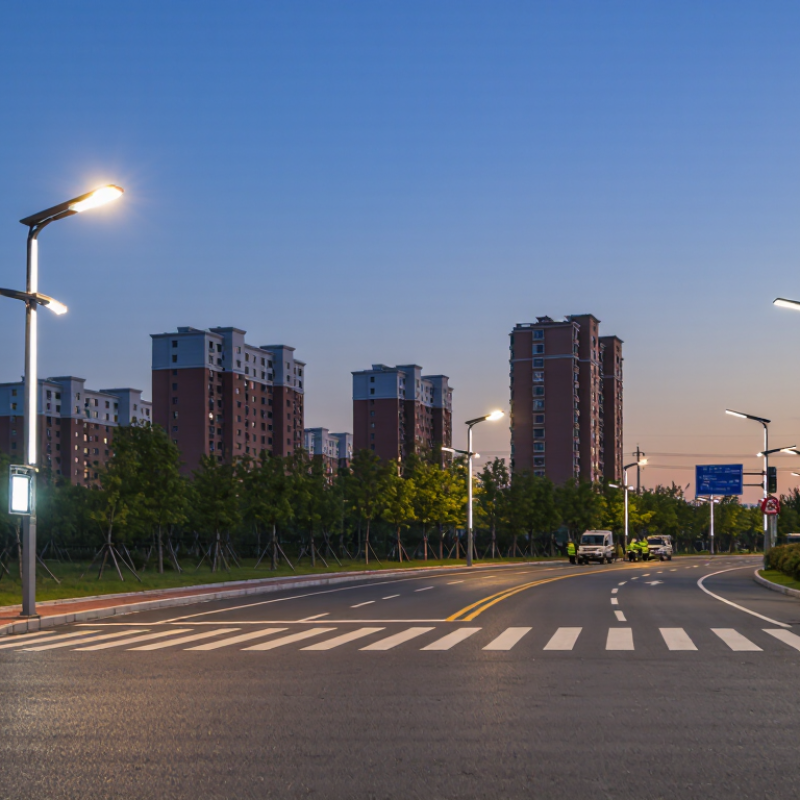
LED street lights are outdoor luminaires using light-emitting diodes to convert electrical energy into visible light. Unlike traditional lamps, LEDs produce light through semiconductor materials, not heated filaments or gas discharge. Their main components include LED chips, an optical lens, a driver, a heat sink, housing, surge protection, and control interfaces. Each part affects reliability. A poor driver can shorten the entire fixture’s service life.
The operating principle is direct. Alternating current enters the driver, which regulates voltage and current for the LED modules. The chips emit light, while lenses shape the beam toward roads, sidewalks, or intersections. Heat moves through the circuit board and housing, then dissipates into surrounding air.
The U.S. Department of Energy reports that LED products can use at least 75% less energy and last up to 25 times longer than incandescent lighting. The International Energy Agency also identifies lighting as roughly 15% of global electricity consumption.
For global projects, these features support lower energy demand and fewer lamp replacements. Smart controls can add dimming, motion response, and fault alerts. However, performance depends on climate, voltage stability, salt exposure, and maintenance planning.
A high lumen rating alone proves little. Engineers should verify lighting distributions, glare limits, surge resistance, and thermal performance against local standards such as IES roadway guidance.
Field inspections often reveal an uncomfortable truth: even well-designed fixtures can perform poorly when installation angles are wrong. Calibration matters.
Global street-lighting projects increasingly choose LED systems because energy savings directly improve long-term budgets. The International Energy Agency estimates that lighting consumes about 15% of global electricity. Replacing older high-pressure discharge fixtures can reduce lighting energy use by roughly 50% to 70%, depending on controls, optics, and existing equipment.
The U.S. Department of Energy’s Solid-State Lighting R&D Opportunities report identifies laboratory LED packages exceeding 200 lumens per watt. Field performance is lower, but efficient optics still deliver more usable light on roads. LEDs also support dimming, motion sensing, and scheduled operation. A quiet midnight setting can use far less power than full output. Small controls matter.
Maintenance savings are equally important. DOE guidance commonly reports LED rated lives of 50,000 hours or more, while many conventional lamps require earlier replacement. Fewer nighttime closures can reduce labor, vehicle use, and traffic disruption. The calculation is not perfect. Dust, heat, poor wiring, and weak controls can reduce actual savings. A 2023 U.S. DOE lifecycle-cost analysis also stresses evaluating purchase price, installation, energy, and maintenance together. For global projects, local tariffs and worker access may change the payback period. Good design leaves room for that uncertainty.
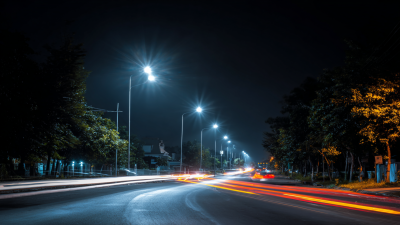
LED street lights deliver consistent illumination with lower energy consumption and longer service intervals. In field assessments, carefully designed optics reduce dark patches near crossings, bends, and bus stops. A brighter road is not automatically safer. Excessive glare can distract drivers, disturb residents, and hide pedestrians beyond the light beam. Photometric planning, suitable mounting heights, and controlled color temperature matter more than raw wattage.
Safety also depends on reliable construction. Weather-resistant housings protect internal components during heavy rain, dust, and temperature changes. Strong impact resistance helps in busy public areas. Surge protection is essential where electrical networks face unstable conditions. Maintenance teams should inspect lenses, connections, and dimming schedules regularly. Small faults become expensive when access roads require special equipment.
Smart control adds practical value when it is used carefully. Remote monitoring can report outages, abnormal power use, and gradual performance decline. Dimming after midnight may reduce consumption while preserving visibility on main routes. Motion sensors can increase output near pedestrians, but poor calibration may cause irritating light changes. Manual override remains important during network failures. Cybersecurity, data protection, and local electrical requirements must guide system selection. Some projects overestimate automation and underestimate staff training. That mistake is avoidable.
LED street lights can reduce energy demand across large road networks. The U.S. Department of Energy reports that LED lighting uses up to 75% less energy than incandescent lighting and can last up to 25 times longer. Street-lighting projects still need careful comparison with existing high-intensity discharge systems. Savings vary with wattage, operating hours, controls, and road geometry.
The environmental benefit extends beyond lower electricity use. Longer service life means fewer replacements, fewer maintenance journeys, and less material waste. The International Energy Agency identifies efficient lighting and controls as important measures for reducing global electricity demand. In practice, adaptive dimming can lower output on quiet roads after midnight. Motion detection may help in selected areas, but it requires reliable sensors and thoughtful safety settings.
Light pollution remains a sustainability concern. Guidance from the International Commission on Illumination recommends controlling glare, upward light, and intrusive illumination. A well-designed installation uses accurate optics, suitable color temperature, and shielding near homes or wildlife habitats. Cooler light is not automatically better. It may increase visual discomfort and ecological disturbance. LED fixtures also contain electronic components that need responsible collection and recycling. This part is often overlooked. A project can save energy yet perform poorly if its controls fail, maintenance data is missing, or discarded equipment is unmanaged. Sustainability should be measured through energy records, failure rates, replacement waste, and nighttime field inspections.
LED street lights are not selected by wattage alone. Global projects demand careful attention to road use, climate, regulations, and maintenance capacity. A reliable selection begins with a photometric study, not a sales brochure. Engineers should check illuminance, uniformity, glare control, and light distribution for each road class.
Climate changes the decision. Coastal roads may require strong corrosion protection, while desert sites need sealed housings and dust-resistant designs. In cold regions, drivers should confirm starting performance at low temperatures. Surge protection also matters where storms are frequent. Small details become expensive problems later.
Look beyond the purchase price. Compare energy consumption, rated service life, replacement access, spare-part availability, and warranty conditions. Controls can reduce late-night energy use, but only when local teams can operate them confidently. Confirm compliance with local electrical and lighting standards before ordering. A pilot installation of ten to twenty fixtures can reveal glare, dark zones, or installation difficulties.
I have seen projects overvalue high lumen output and overlook uniformity. That mistake can leave pedestrians in uneven shadows. Procurement teams should also request test reports from recognized laboratories and verify performance independently. Real roads are not spreadsheets; dust, traffic, and maintenance habits can change results. A practical design leaves room for those uncertainties.