Why Does Mold Grow on Toothbrushes?
A toothbrush usually does not develop mold from nowhere. Moisture, warmth, and leftover toothpaste can create a damp film on bristles or a brush holder. Picture a brush rinsed quickly, then tucked into a crowded cup beside the sink. Water stays trapped between the bristles. The bathroom’s humid air slows drying. Given enough time, mold may appear as dark specks, fuzzy patches, or a musty smell.
Mold specialist Michael Rubino often emphasizes the role of moisture in mold growth. A careful paraphrase of his advice is: “Address the moisture, not just the visible growth.” That principle helps explain why wiping a holder may not solve the problem if water keeps collecting beneath it. Still, visible discoloration is not always mold, and a photo alone cannot identify a growth with certainty. That distinction matters.
This introduction explores why toothbrush mold can form, which everyday habits may encourage it, and how to reduce persistent dampness around a brush. Small details count: a wet brush touching another, a holder with standing water, or a closed cabinet with little airflow. Let it dry. Keep brushes separated. Clean the holder regularly, and replace a brush that remains discolored or smells musty after cleaning. There is no perfect bathroom routine, and occasional dampness is hard to avoid. But noticing where water lingers can make the problem easier to prevent.
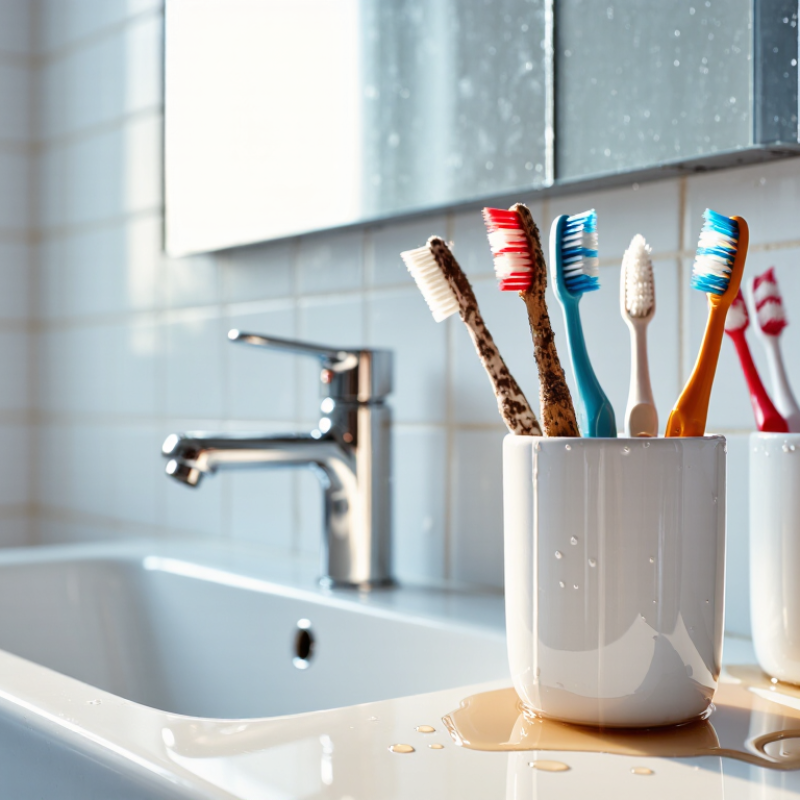
Moisture and Warmth Create Favorable Conditions for Mold
Mold grows where moisture lingers, and a toothbrush can stay damp long after brushing. Its bristles trap tiny droplets between dense rows of nylon. In a warm bathroom, that moisture evaporates slowly, especially when the brush sits in a cup or closed cabinet. Warmth helps. So does still air. Together, these conditions let mold spores already present in the environment settle and grow. Toothpaste residue and other debris may also collect between bristles, though visible mold does not appear on every damp brush.
A toothbrush left beside a steamy shower may remain wet for hours. A little water pooled at the bottom of a holder can keep its handle damp, too. Small details matter. Rinse the brush thoroughly, shake off excess water, and store it upright where air can circulate. Keep brushes from touching each other, and clean the holder regularly. A closed travel case is useful for transport, but storing a wet brush inside for long periods can trap moisture. Not always. Bathroom temperature, airflow, and how well the brush dries all vary, so dampness alone does not prove mold is present. If you see fuzzy spots or notice an unusual smell, replace the brush rather than trying to clean the growth away.
Why Does Mold Grow on Toothbrushes? - Moisture and Warmth Create Favorable Conditions for Mold | Factor | Conditions on a Toothbrush | How It Can Favor Mold | Practical Prevention |
| Lingering moisture | Water can remain between bristles after brushing, especially when the brush is stored wet. | Mold needs moisture to grow; persistently damp bristles provide a more favorable environment than dry ones. | Rinse the brush, shake off excess water, and let it air-dry upright. |
| Warm bathroom air | Bathrooms are often warm and humid, particularly after showers. | Many common indoor molds grow more readily in warm, damp conditions than in cool, dry ones. | Improve bathroom ventilation and avoid storing the brush in a steamy, poorly ventilated area. |
| Enclosed storage | A closed travel cap or tightly covered holder can slow drying when the toothbrush is still wet. | Trapped humidity can keep bristles damp for longer. | Use a cover for transport, but allow the brush to dry before enclosing it for extended storage. |
| Contact with nearby surfaces | Bristles may touch a countertop, sink, or the bristles of another toothbrush. | Contact can transfer moisture and debris, while close packing can reduce airflow around the brush. | Store brushes upright and separated, with the bristles clear of surfaces and other brushes. |
| Residue and debris | Small amounts of toothpaste, saliva, or other debris may remain around the bristles. | Residue can collect with moisture and make the brush harder to keep clean. | Rinse the brush thoroughly after each use and clean the holder regularly. |
| Slow drying | A brush kept in a crowded holder or a damp cabinet may have limited airflow. | Less airflow can delay drying and prolong damp conditions. | Choose an open, well-ventilated storage spot and keep the holder clean and dry. |
How Airborne Spores Reach Toothbrush Bristles
Why Does Mold Grow on Toothbrushes?
Airborne mold spores are tiny and move with ordinary indoor air. They can enter through an open window, arrive on clothing, or circulate from dusty surfaces. When bathroom air shifts, some spores may settle between toothbrush bristles. They settle quietly. A brush left uncovered near a sink may collect more dust and droplets than one stored in a dry, ventilated place.
Spores alone do not guarantee visible mold. They need sustained moisture and a suitable food source. Bristles can stay damp after brushing, especially when packed tightly into a holder or kept inside a closed cabinet. Toothpaste residue and microscopic debris may also provide material for growth. Moisture changes everything. Still, a dark spot is not always mold, and appearance alone cannot identify it with certainty. I would avoid assuming every discoloration has the same cause.
Tips: Rinse bristles thoroughly, shake off excess water, and let the brush air-dry upright. Keep brushes separated, and avoid sealed covers for routine storage. Clean the holder regularly, since pooled water can linger at its base. If mold keeps returning, check the room’s ventilation and persistent dampness.
Residue and Bathroom Dust Provide Mold with Nutrients
Why Does Mold Grow on Toothbrushes?
Residue and Bathroom Dust Provide Mold with Nutrients
A toothbrush may look clean after rinsing, yet tiny amounts of saliva, food debris, and toothpaste can remain between its bristles. These traces provide organic material that mold can use. Bathroom dust can add more: it may contain skin flakes and other particles that settle on the brush head. Not much, perhaps, but residue does not need to be visible to matter.
Moisture helps those particles become part of a suitable environment. A brush left wet in a poorly ventilated bathroom may dry slowly, especially when stored in a closed cup or cabinet. Warm, damp air can make the problem more likely. Mold spores are common indoors, so the key issue is often not where they came from, but whether the brush stays damp and has material to grow on.
Rinse the brush thoroughly, then store it upright where air can reach the bristles. Keep it away from splashes and avoid covering it while wet. This will not remove every spore, and bathroom dust varies from home to home. A dark spot is not always mold, either. Still, a persistently damp brush deserves attention; replace it if the bristles look damaged or growth remains after cleaning.
Toothbrush Storage and Use Affect Mold Growth
Why Does Mold Grow on Toothbrushes?
Toothbrush Storage and Use Affect Mold Growth
Mold can grow when damp bristles remain in a warm, poorly ventilated bathroom. Water trapped near the brush head, sink splashes, and a tight travel cap can all slow drying. In NSF International’s 2011 household study, 64% of sampled toothbrush holders contained mold or yeast. That finding concerns holders, not toothbrushes, and does not mean every brush is contaminated. Small details matter.
Storage affects how quickly a brush dries. The American Dental Association advises rinsing toothbrushes, storing them upright, and allowing them to air-dry. It also cautions against routinely using closed containers, which can encourage microbial growth. Keep brush heads from touching each other. A crowded cup beside a steamy shower may stay damp for hours. A clean-looking brush is not necessarily dry; appearance alone is a poor check.
Tips: Shake off excess water and place the brush upright in an open holder. Let it dry between uses, rather than sealing it in a cap at home. Clean the holder regularly, and replace a brush with visible mold or damaged bristles. The ADA recommends replacing toothbrushes every three to four months, or sooner if bristles become frayed. A little bathroom humidity is hard to avoid; better airflow is the practical fix.
Why Does Mold Grow on Toothbrushes?
Toothbrush storage and use affect how long bristles stay damp. This chart shows general indoor humidity reference points—not toothbrush-specific mold-growth rates.
The U.S. EPA recommends keeping indoor relative humidity below 60%, ideally between 30% and 50%. Rinse toothbrushes after use, shake off excess water, and store them upright in an open, well-ventilated spot so they can dry. Room humidity is only one factor; a wet toothbrush can remain damp even in a less humid room.
How Drying and Cleaning Help Limit Mold on Toothbrushes
Mold can grow on a toothbrush when moisture lingers between uses. Bathroom air is often humid, and a brush stored near a sink may collect tiny droplets or toothpaste residue. The bristles can look clean while staying damp at the base. It happens. A little discoloration does not always mean mold, so avoid guessing from appearance alone.
Tips: After brushing, rinse the head thoroughly under running water and shake off excess droplets. Store the brush upright in an open holder, with its head uncovered and separated from other brushes. Let it air-dry fully before placing it in a travel case. Wipe the holder regularly; pooled water and old paste can keep the area damp. Small habits matter.
If your bathroom stays humid, improve airflow by running an exhaust fan or opening a window when practical. Don’t share toothbrushes, and replace a brush with visibly damaged or persistently moldy bristles. A closed cabinet may seem tidy, but it can slow drying if the brush goes in wet. I still forget to clean my holder sometimes; that’s a useful reminder to check the small, easy-to-miss spots.