What Is the Best Type of Lighting Fixtures?
Choosing the best lighting fixtures is not simply a matter of style. It involves comfort, performance, energy use, and the character of each room. A pendant may look striking above a dining table, while a recessed downlight may create harsh shadows on nearby faces. The right choice depends on what people do beneath the light.
Randall Whitehead, an architectural lighting designer and author, describes lighting as “the jewelry of architecture.” His comparison is useful because fixtures should enhance a space without overwhelming it. A warm wall sconce can soften a narrow hallway. An adjustable spotlight can reveal artwork, wood grain, or a textured kitchen backsplash. In contrast, an attractive fixture with poor color rendering may make food, fabric, and skin tones appear dull.
There is no universal winner. Not really. The best lighting fixtures balance task lighting, ambient illumination, and visual comfort. Homeowners should examine beam angle, color temperature, dimming compatibility, glare control, maintenance, and installation requirements. A fixture that performs well in a showroom may feel uncomfortable above a reflective stone counter. That mistake is common.
This guide explores popular fixture types, including pendants, chandeliers, recessed lights, track systems, sconces, and flush mounts. It also considers real-world details, such as ceiling height, room size, cleaning access, and changing daylight. Personal taste still matters. However, careful planning usually matters more. Good lighting should support daily life quietly, even when the fixture itself becomes a beautiful focal point.
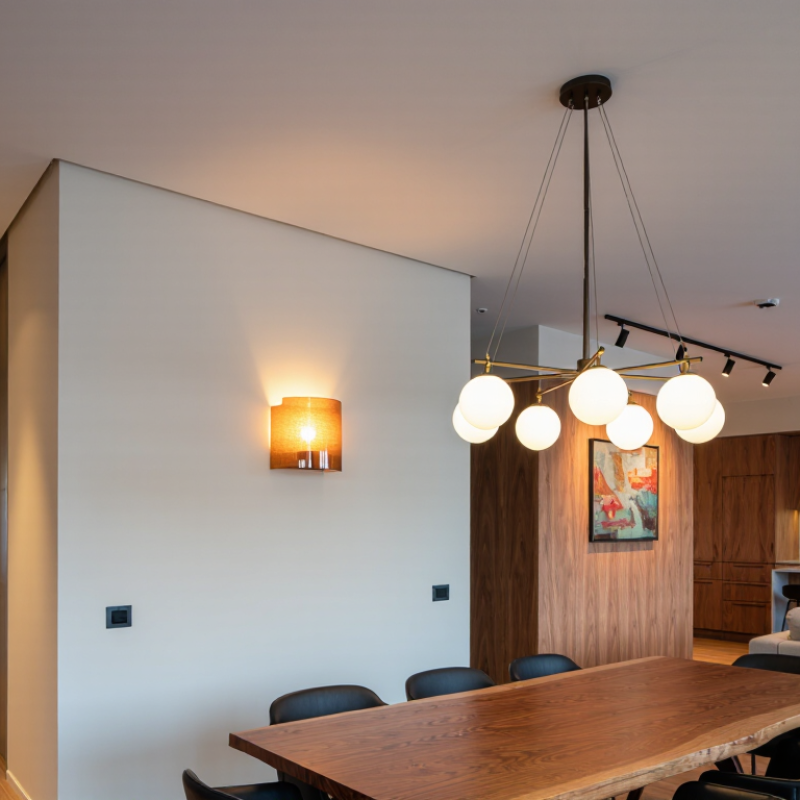
How Lighting Fixtures Are Classified by Function and Placement
What Is the Best Type of Lighting Fixtures?
Lighting fixtures are best classified by function and placement, not appearance alone. Ambient fixtures provide general brightness across a room. Ceiling-mounted lights, flush mounts, and recessed fixtures often serve this role. Task fixtures focus on activities such as reading, cooking, or shaving. Desk lamps, under-cabinet lights, and bathroom sconces can improve visual comfort.
Accent fixtures direct attention toward artwork, shelving, textured walls, or architectural details. Track lights and adjustable spotlights work well when their beams are aimed carefully. Decorative fixtures add character, but they should still provide useful illumination. Placement changes the result. A pendant above a dining table creates a clear focal area, while wall lighting can soften harsh shadows near a mirror. Floor fixtures help fill darker corners without altering ceiling structure.
Tips: Match the fixture to the task and mounting position. Check the beam angle before installation. Use warmer light in bedrooms and living areas, but choose clearer light for detailed work. Keep switches accessible, especially near entrances and stairs. I once placed a bright fixture above a seating area, and the glare made conversation uncomfortable. That choice was not perfect. Reviewing light levels at night is often more useful than judging them from a daytime plan. Leave enough space around fixtures for cleaning, maintenance, and safe movement.
What Is the Best Type of Lighting Fixtures? - How Lighting Fixtures Are Classified by Function and Placement
| Lighting Function | Typical Fixture Type | Common Placement | Primary Purpose | Typical Beam or Distribution | Recommended Color Temperature | Recommended Color Rendering | Typical Protection Level | Best-Suited Applications |
|---|---|---|---|---|---|---|---|---|
| Ambient Lighting | Ceiling-mounted fixture | Center of a room or evenly spaced across the ceiling | Provides general, uniform illumination for safe movement and everyday activities. | Wide, diffuse distribution | 2700–4000 K | CRI 80 or higher | IP20 for dry indoor areas | Living rooms, bedrooms, hallways, offices, and other general interior spaces. |
| Ambient Lighting | Pendant light | Suspended from the ceiling above a central area, table, or island | Creates overall illumination while adding a visible design element. | Downward or multidirectional | 2700–3500 K | CRI 80 or higher | IP20 indoors; higher rating where moisture is present | Dining areas, kitchen islands, reception areas, and open-plan interiors. |
| Task Lighting | Under-cabinet light | Under wall cabinets or shelves, close to the work surface | Reduces shadows and improves visibility for detailed work. | Focused linear distribution | 3000–4000 K | CRI 80 or higher; CRI 90 preferred for food preparation | IP20 for dry areas; IP44 or higher near splash zones | Kitchen counters, workbenches, study desks, and display shelves. |
| Task Lighting | Desk or table lamp | On a desk, bedside table, console, or work surface | Illuminates a small working area and allows adjustable positioning. | Narrow to medium beam | 3000–5000 K | CRI 80 or higher | IP20 for dry indoor use | Reading, writing, computer work, crafting, and bedside activities. |
| Task Lighting | Recessed downlight | Flush-mounted within the ceiling above a target area | Provides controlled illumination without occupying visual space. | Narrow, medium, or wide beam | 2700–4000 K | CRI 80 or higher; CRI 90 preferred for retail and artwork | IP20 indoors; IP44 or higher in damp locations | Kitchens, corridors, bathrooms, retail spaces, and offices. |
| Accent Lighting | Track spotlight | Mounted on a ceiling track and aimed at selected objects or surfaces | Highlights artwork, merchandise, architectural details, or focal points. | Adjustable narrow or medium beam | 2700–3500 K | CRI 90 or higher for accurate color presentation | IP20 indoors; outdoor-rated models require an appropriate IP rating | Galleries, shops, restaurants, living rooms, and feature walls. |
| Accent Lighting | Wall washer | Ceiling or wall-mounted close to a vertical surface | Produces an even layer of light across a wall and enhances spatial depth. | Broad asymmetric distribution | 2700–3500 K | CRI 90 or higher when illuminating finishes or artwork | IP20 indoors; select an outdoor rating for exterior walls | Feature walls, façades, galleries, hospitality areas, and retail interiors. |
| Decorative Lighting | Chandelier | Suspended from the ceiling above a dining table or central space | Acts as a visual centerpiece and may supplement ambient illumination. | Upward, downward, or multidirectional | 2700–3000 K | CRI 80 or higher | IP20 for dry indoor areas | Dining rooms, foyers, stairwells, hotels, restaurants, and reception spaces. |
| Decorative Lighting | Wall sconce | Mounted on an interior or exterior wall, commonly at eye level | Adds localized illumination, visual comfort, and architectural character. | Upward, downward, or bidirectional | 2700–3500 K | CRI 80 or higher | IP20 indoors; IP44 or higher for many outdoor or bathroom locations | Bedrooms, corridors, bathrooms, patios, entrances, and hospitality spaces. |
| Safety and Guidance Lighting | Step or stair light | Installed in walls, risers, handrails, or along stair edges | Improves visibility of changes in level and helps reduce trip hazards. | Low-glare directional distribution | 2700–4000 K | CRI 80 or higher | IP44 or higher in exposed or damp locations | Staircases, pathways, ramps, decks, corridors, and landscape steps. |
| Outdoor Area Lighting | Bollard light | Installed vertically along walkways, driveways, and landscape borders | Provides low-level path illumination and defines circulation routes. | Wide, shielded distribution | 2700–3000 K | CRI 80 or higher | IP44 minimum; IP65 is common for more exposed locations | Gardens, pedestrian paths, driveways, courtyards, and campuses. |
| Outdoor Area Lighting | Floodlight | Mounted on walls, poles, ceilings, or ground brackets | Illuminates large outdoor areas for security, activity, or maintenance. | Wide flood distribution | 3000–5000 K | CRI 70 or higher; CRI 80 preferred for people-focused areas | IP65 or higher for exposed outdoor installation | Building exteriors, parking areas, sports grounds, yards, and loading zones. |
| Outdoor Area Lighting | Wall-mounted outdoor lantern | Mounted beside exterior doors, gates, garages, or façades | Provides entrance visibility, orientation, and decorative exterior light. | Downward or multidirectional | 2700–3000 K | CRI 80 or higher | IP44 minimum; IP54 or higher for severe weather exposure | Entrances, porches, garages, terraces, balconies, and exterior corridors. |
| Special-Purpose Lighting | Linear high-bay fixture | Suspended or surface-mounted at high ceilings in large spaces | Delivers efficient, uniform illumination over expansive floor areas. | Medium or wide high-angle distribution | 4000–5000 K | CRI 80 or higher | IP20 indoors; IP54 or higher in dusty or humid environments | Warehouses, factories, workshops, sports halls, and distribution centers. |
| Special-Purpose Lighting | Emergency light | Above exits, along escape routes, and in key circulation areas | Provides illumination during normal power failure to support safe evacuation. | Wide route-oriented distribution | Typically 4000–6500 K | CRI 70 or higher | IP20 indoors; higher ratings for damp or exposed locations | Commercial buildings, public facilities, stairwells, corridors, and exit routes. |
Related Posts
-

China Top Lighting Fixtures Manufacturers for Global Buyers
-
What Are Lighting Fixtures and How Do They Work?
-
Top 10 Lighting Fixtures That Brighten Your Home A Comprehensive Guide
-
How to Choose Commercial Lighting for Your Business Needs?
-
2026 Top Innovations in Street Lights That Will Change Cities?
-
Best Street Lights for Global Buyers in 2026