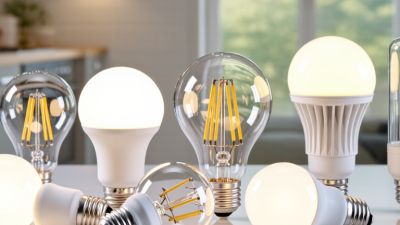
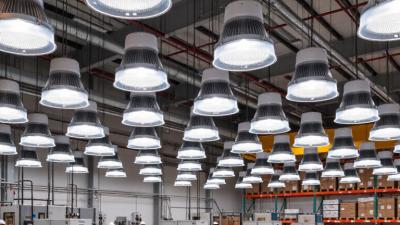
What Is an LED Light Bulb and How Does It Work?
An LED light bulb turns electrical energy into light using a semiconductor rather than a glowing wire. Inside the bulb, a small electronic driver regulates incoming power and supplies current to the LED chips. When current passes through those chips, they emit light. It sounds simple. The complete bulb is not.
A typical bulb also contains a lens or diffuser, a housing, and parts that move heat away from the LEDs. That heat control matters: excess heat can shorten component life, even though the bulb feels cooler than an incandescent lamp during use. On the package, lumens describe light output, while watts indicate power consumption. Color temperature, measured in kelvins, helps distinguish warm, yellowish light from cooler, bluer light. These details make comparisons easier, but labels can still confuse buyers.
This guide explains what a led light bulb contains and how its parts work together, from the driver to the light-emitting chips. It also looks at practical choices such as brightness, color, dimmer compatibility, and expected service life. Performance varies by design, fixture, and operating conditions, so a stated lifespan is an estimate, not a promise. Small differences matter. Understanding the basics can help you choose a bulb that suits a reading lamp, kitchen fixture, or hallway without relying on marketing claims alone.
Definition and Essential Components of an LED Light Bulb
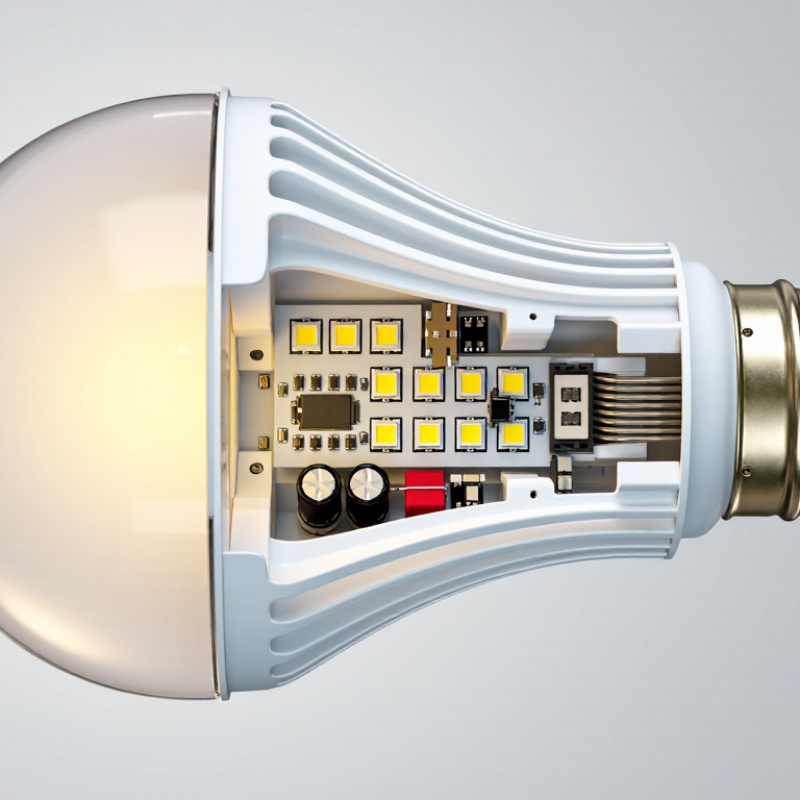
An LED light bulb is an electric lamp that uses light-emitting diodes rather than a heated filament. Inside each diode, electrical current passes through semiconductor materials and produces light. The process generates less heat than an incandescent filament, though the bulb still needs to manage warmth. Small parts matter.
The LED chips are mounted on a circuit board, which supports them and carries electricity. A driver converts incoming power into a controlled current the chips can use. This component helps keep light output steady when household voltage varies. The driver may also affect dimming and flicker, so its quality is not a minor detail.
A heat sink or thermally conductive body draws heat away from the chips and driver. Excess heat can shorten component life. A diffuser or lens spreads the light, softening bright points and shaping the beam. The outer housing protects these parts, while the screw or pin base connects the bulb to a fixture. Some bulbs use a phosphor coating to turn blue LED light into a warmer white glow. That explanation is useful, but it simplifies a complex system: component layout and materials vary, and small design choices can change brightness, color, and durability.
How Semiconductor Diodes Produce Light
An LED light bulb produces light through semiconductor diodes rather than a heated wire. Inside each diode, two semiconductor regions meet at a tiny junction. When the bulb’s driver supplies suitable current, electrons move across that junction and meet positively charged “holes.” Their recombination releases energy as photons. That is the light we see.
The semiconductor’s bandgap helps determine each photon’s wavelength, and therefore the diode’s color. A blue diode can look surprisingly small beside its bright output. Many white LED bulbs use a blue diode with a phosphor coating. The phosphor absorbs some blue light and re-emits it across a broader range, creating a white appearance. The result depends on both materials and coating thickness.
A simplified diagram makes this process look tidy. Real bulbs involve more. A driver controls current because a diode can respond sharply to voltage changes. Some energy also becomes heat, so the bulb’s base often helps carry heat away from the diodes. Touch a working bulb’s housing and it may feel warm, though the LED junction itself needs careful thermal management. The process is efficient, but not perfectly efficient; that distinction matters when comparing light output and operating life.
How the Driver Regulates Power to the LEDs
An LED bulb needs more than a set of light-emitting diodes. The driver is the small circuit that connects the bulb to household power. It converts incoming alternating current into the form the LEDs can use, then controls the current flowing through them. LEDs respond strongly to current changes. Too much can damage them; too little can make the light dim. Not just a plug.
A well-designed driver keeps output steady as the supply voltage shifts. It may also support dimming, but the bulb and dimmer must be compatible. Some drivers reduce visible flicker better than others, especially when power is uneven. Heat matters, too. Warm air trapped inside a compact bulb can stress electronic parts over time, so driver quality and thermal design both affect useful life. This detail is easy to miss. In practice, performance varies among bulbs, even when their labels look similar.
Tips: If a bulb flickers or buzzes, check that it is suitable for the dimmer and fixture. Try it in another socket to narrow down the cause. Avoid covering the bulb or using it in an enclosed fixture unless its instructions allow it. A quick check can help, though it may not reveal every driver issue.
How Heat Management Supports Bulb Performance
An LED bulb produces light when electric current passes through semiconductor chips. Not all energy becomes visible light. Some becomes heat. That heat gathers near the LED junction and must travel through the circuit board, internal frame, and outer housing. A metal heat sink spreads it across a larger surface, where surrounding air can carry it away. The bulb may look simple, but its thermal path is doing quiet work.
Excessive heat can reduce light output and speed component aging. Drivers and capacitors can also be affected, so cooling supports more than the LED itself. In a recessed or enclosed fixture, warm air may linger around the bulb. Dust, a tight shade, or a hot ceiling can make the problem worse. A bulb may feel only mildly warm at its diffuser while internal parts run hotter. That difference is easy to miss. Check the fixture guidance and allow airflow where the design permits; not every LED bulb suits every enclosed fitting. I would not judge cooling by touch alone. It is a rough clue, not a measurement.